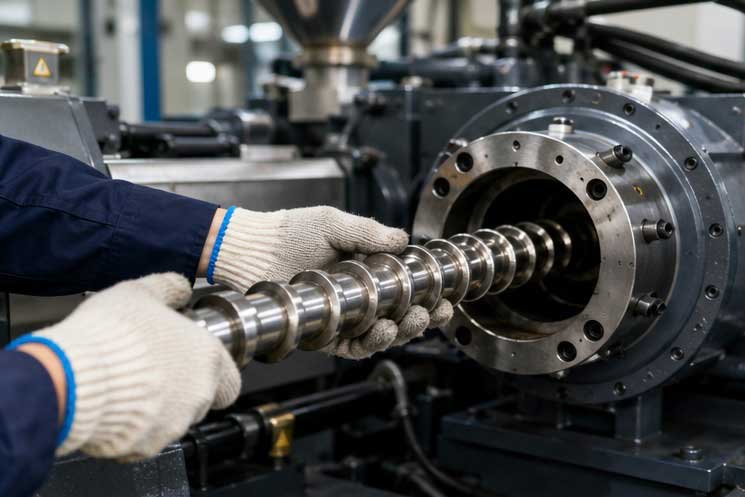
How Are Pill Bottles Manufactured?
Materials, Processes & Quality Standards
Pill bottles are one of the most common forms of pharmaceutical packaging for tablets, capsules, and other solid-dose medications.
While they may look simple, manufacturing pharmaceutical pill bottles involves far stricter requirements than ordinary plastic containers.
In pharmaceutical packaging, factors such as material safety, dimensional accuracy, cleanliness, and consistency directly affect product quality and regulatory compliance.
This article explains how pill bottles are manufactured, focusing on materials, production methods, and the key quality standards required for pharmaceutical use.
What Are Pill Bottles?
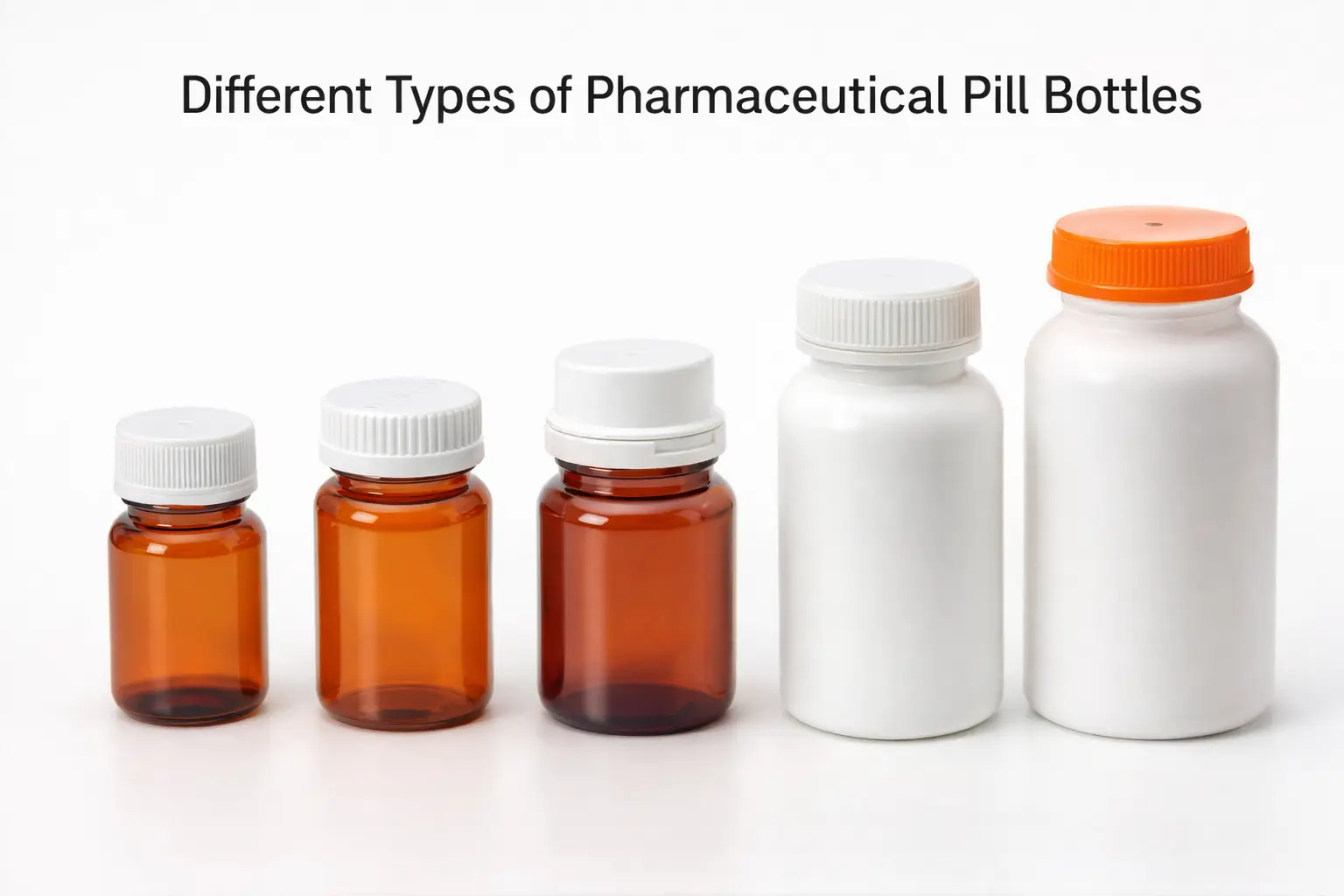
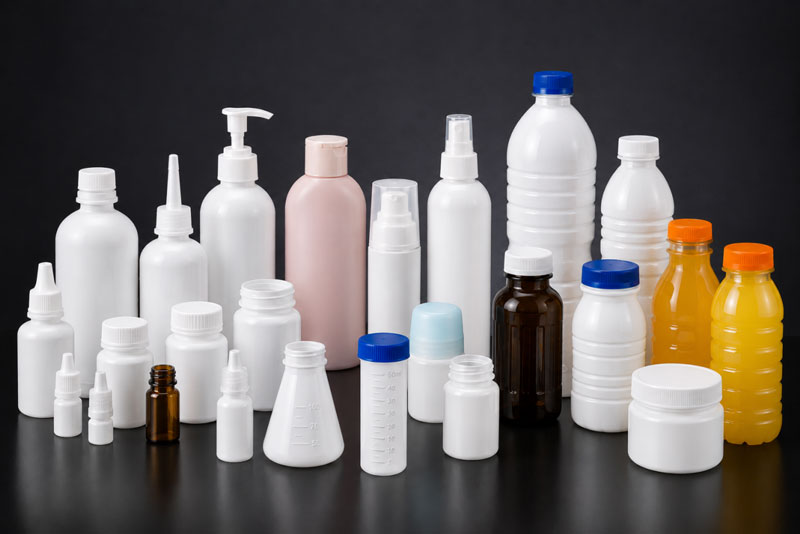
Examples of different pharmaceutical pill bottles commonly used for tablets and capsules in pharmaceutical packaging.
Pill bottles are rigid plastic containers designed to store and dispense solid oral medications such as tablets and capsules. They are widely used across the pharmaceutical industry, including:
- Pharmaceutical manufacturing plants
- Contract packaging facilities
- OTC and prescription drug packaging lines
In practice, pill bottles range from small containers used for high-value prescription medicines to larger bottles commonly seen in OTC and dietary supplement products.
Common Materials Used for Pill Bottles
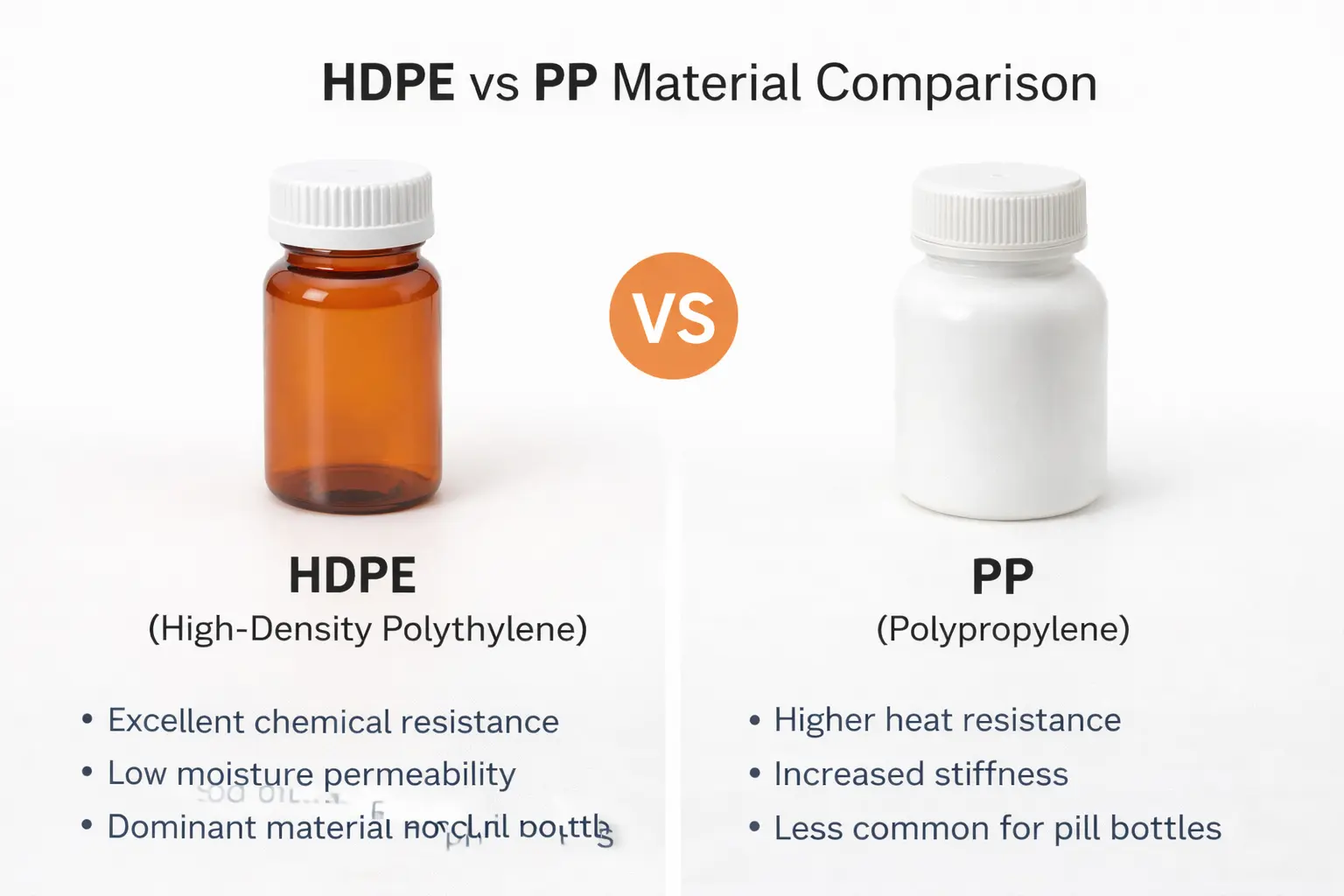
Comparison between HDPE and PP materials commonly used for pharmaceutical pill bottles, highlighting chemical resistance, moisture permeability, and typical applications.
Material selection plays a critical role in pharmaceutical bottle manufacturing. The choice of plastic directly affects moisture protection, chemical resistance, and long-term stability.
HDPE (High-Density Polyethylene)
HDPE is the most widely used material for pill bottles in pharmaceutical packaging. It is preferred because it offers:
- Excellent chemical resistance
- Low moisture permeability
- Good rigidity and impact strength
- Proven safety for pharmaceutical applications
In real production environments, HDPE provides a reliable balance between performance, processability, and cost.
PP (Polypropylene)
PP is used in certain pharmaceutical applications that require:
- Higher heat resistance
- Increased stiffness
However, compared to HDPE, PP is less commonly selected for standard pill bottle production due to processing considerations and material characteristics.
Why PET Is Rarely Used for Pill Bottles
Although PET is widely used for beverage packaging, it is rarely chosen for pill bottles. From a pharmaceutical packaging perspective, PET does not offer the same moisture barrier performance required for solid-dose medications.
Pill Bottle Manufacturing Methods Explained
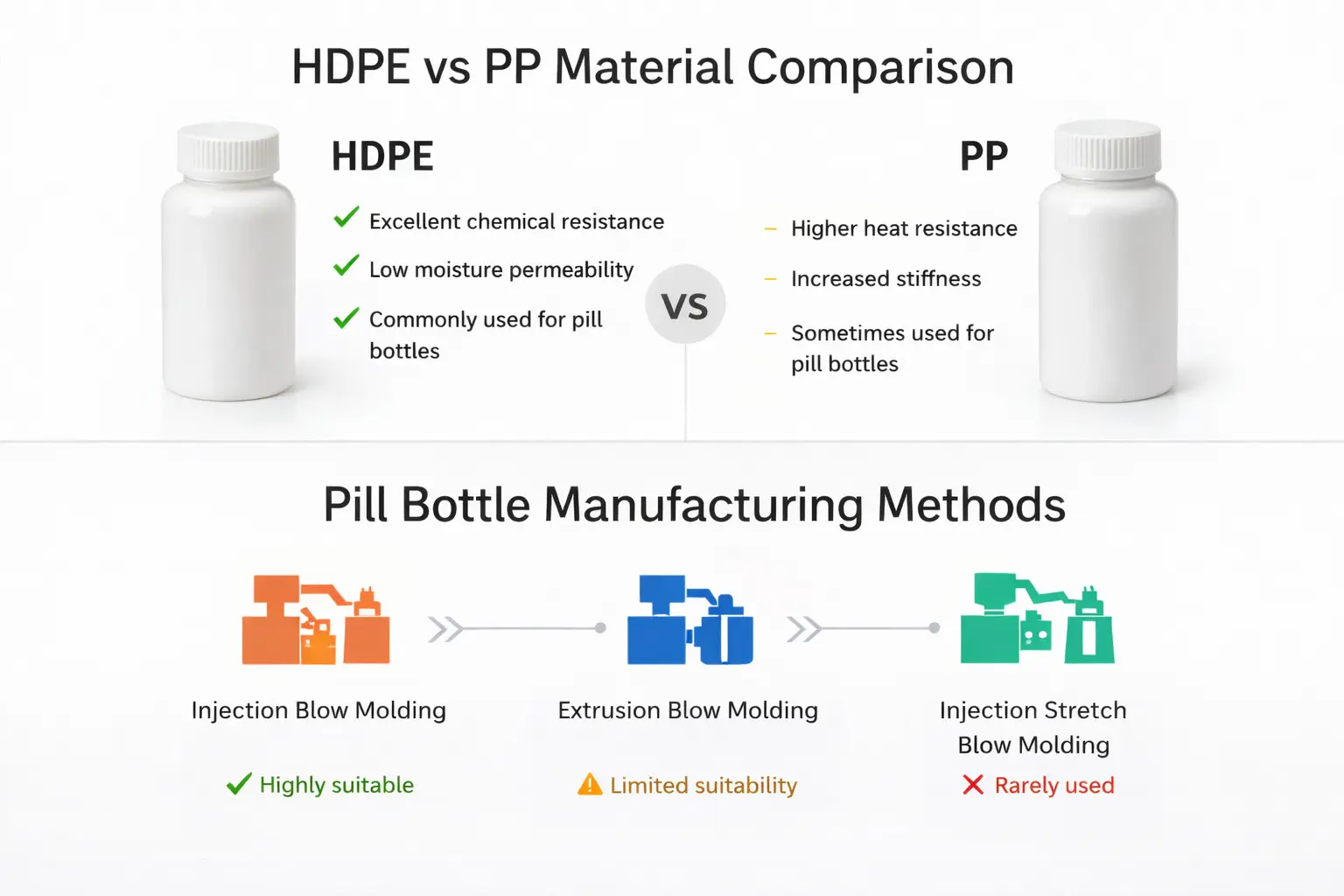
Overview of common pill bottle manufacturing methods, showing the suitability of injection blow molding, extrusion blow molding, and injection stretch blow molding for pharmaceutical packaging.
Several plastic molding technologies are capable of producing hollow containers. However, not every method is suitable for pharmaceutical pill bottles, where dimensional control and cleanliness are critical.
| Manufacturing Method | Suitability for Pill Bottles |
|---|---|
| Injection Blow Molding | ✅ Highly suitable |
| Extrusion Blow Molding | ⚠️ Limited suitability |
| Injection Stretch Blow Molding | ❌ Rarely used |
Among these options, injection blow molding is commonly preferred for small to medium-sized pharmaceutical bottles because it offers better consistency and process control.
For manufacturers evaluating suitable equipment, modern injection blow molding machines are specifically designed to meet pharmaceutical-grade production requirements.
Injection Blow vs Extrusion Blow for Pill Bottles
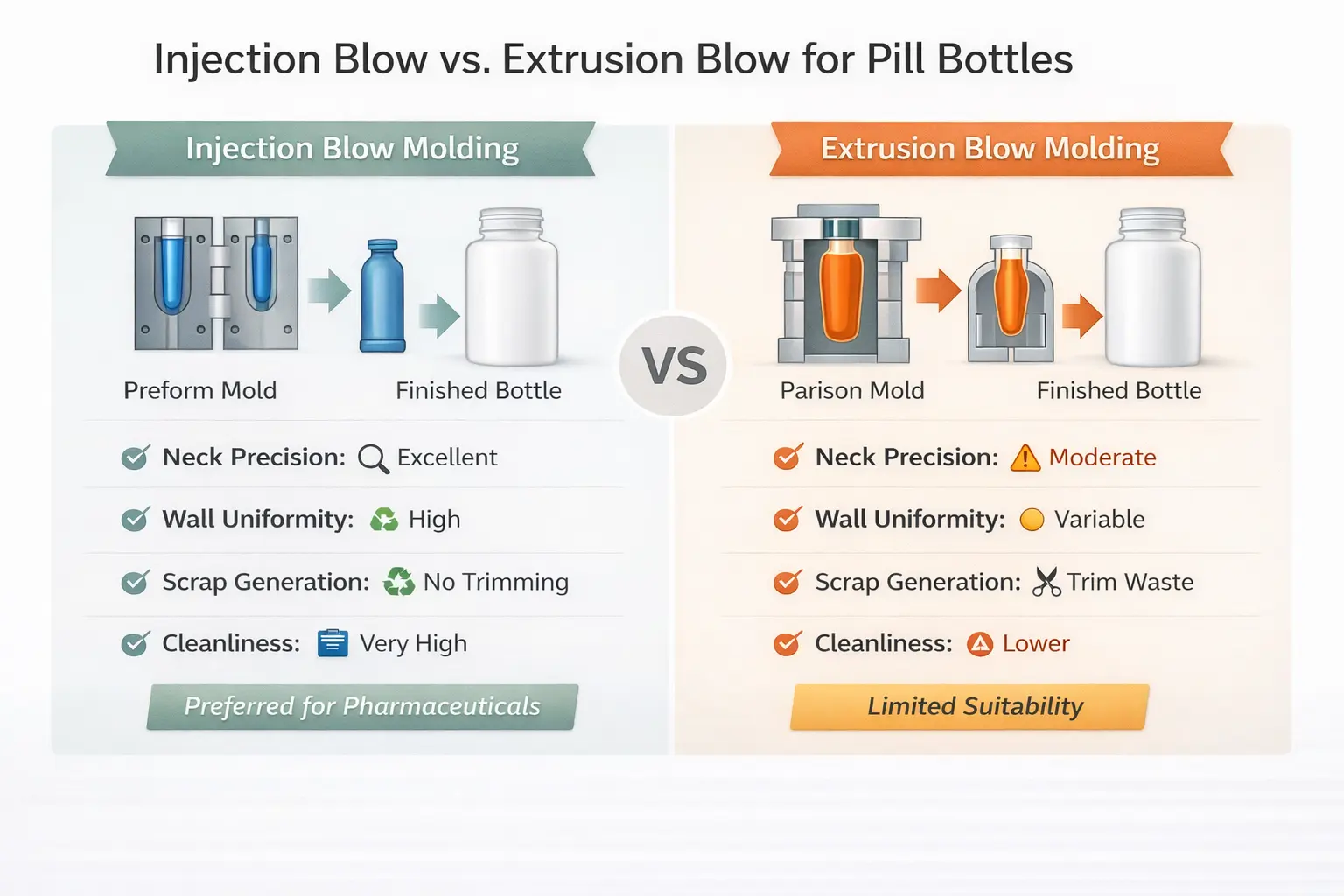
Comparison between injection blow molding and extrusion blow molding for pharmaceutical pill bottle manufacturing, highlighting process precision, material efficiency, and suitability for pharmaceutical packaging.
From a manufacturing perspective, the choice between injection blow molding and extrusion blow molding has a direct impact on bottle quality, cleanliness, and long-term production stability.
| Criteria | Injection Blow Molding | Extrusion Blow Molding |
|---|---|---|
| Neck finish accuracy | Excellent | Moderate |
| Wall thickness uniformity | High | Variable |
| Scrap generation | None | Trimming required |
| Cleanliness | Very high | Lower |
| Suitability for pharma | Ideal | Limited |
For pharmaceutical manufacturers requiring high neck precision, clean production, and long-term dimensional stability, injection blow molding machines are often selected as the core equipment in pill bottle production lines.
You can explore a full range of pharmaceutical-grade injection blow molding machines here.
Injection Blow Molding Process for Pill Bottles
Injection Blow Molding Process for Pharmaceutical Pill Bottles
Video demonstration of the injection blow molding process used for manufacturing pharmaceutical pill bottles.
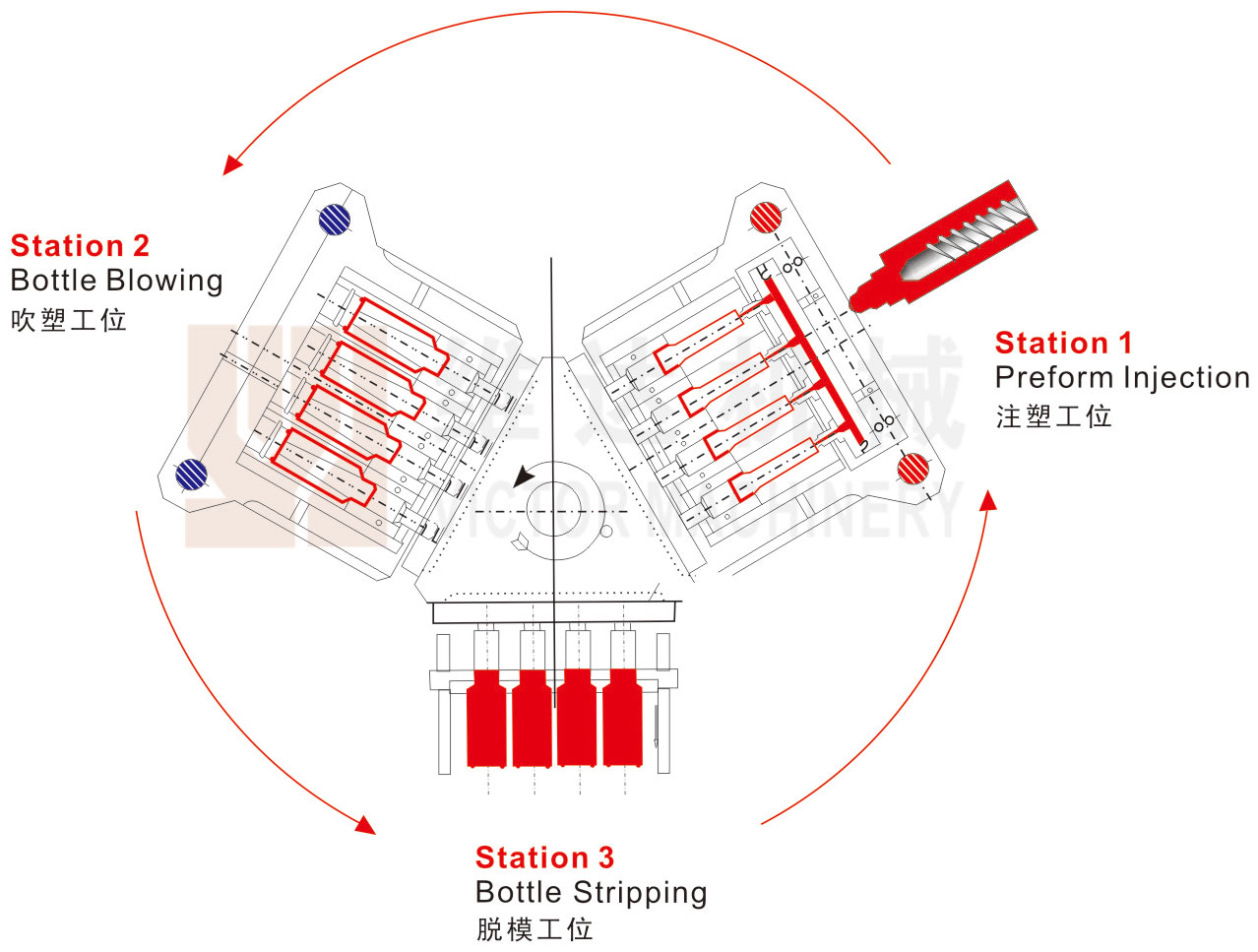
Injection blow molding process diagram showing the key stages involved in pharmaceutical pill bottle production.
Injection blow molding combines injection molding and blow molding into a single, continuous process designed for precision containers.
- Injection Stage – Molten plastic is injected into a mold to form a preform with a precise neck finish.
- Blowing Stage – The preform expands inside the blow mold using compressed air.
- Cooling and Ejection – Bottles are ejected without trimming or secondary processing.
This integrated process is implemented on dedicated injection blow molding machines engineered for pharmaceutical packaging, where process stability and repeatability are critical.
Learn more about available injection blow molding machine solutions for pharmaceutical bottle manufacturing.
Key Quality Requirements for Pharmaceutical Pill Bottles
Meeting these quality requirements depends not only on materials and molds, but also on the performance of the injection blow molding machine used in production.
Modern pharmaceutical-grade injection blow molding machines are designed to support consistent quality control and clean manufacturing environments.
Dimensional Accuracy
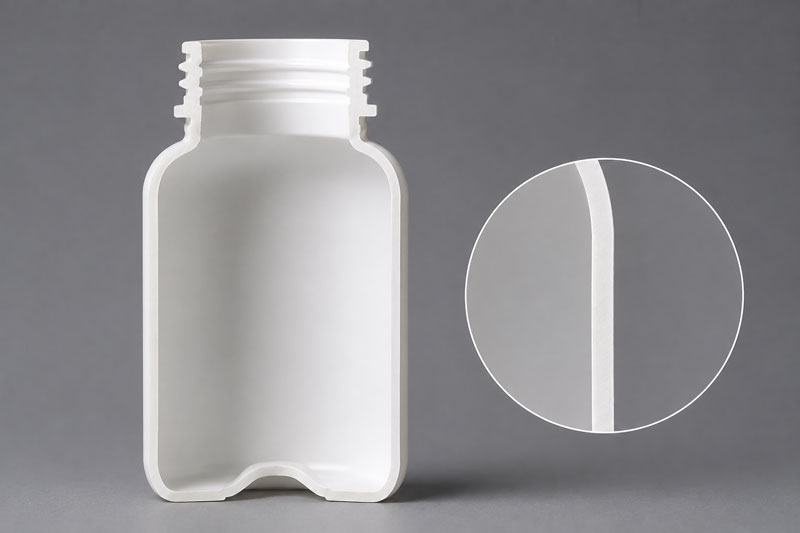
Precise neck finishes are essential to ensure reliable sealing with caps and closures.
Uniform Wall Thickness
Consistent wall thickness helps maintain mechanical strength and prevents deformation during filling, capping, and transportation.
Clean Production Environment
In pharmaceutical packaging, trimming scrap or secondary contamination is unacceptable. Clean, controlled production is critical.
Material Compliance
Plastic materials must comply with pharmaceutical and food-contact regulations in target markets.
Common Defects in Pill Bottle Production and How to Avoid Them
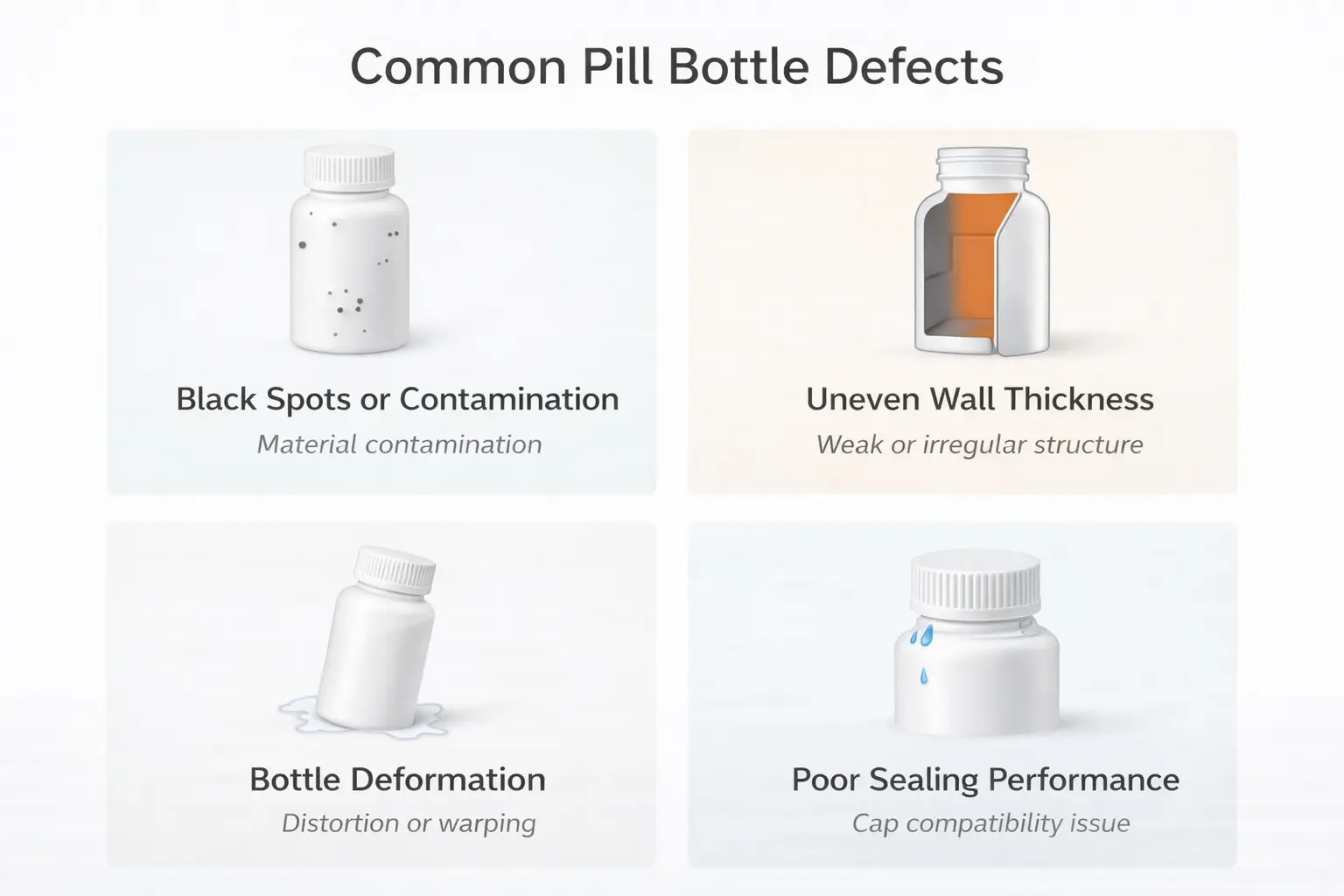
Common defects observed in pharmaceutical pill bottle production.
Even small defects can result in product rejection or regulatory issues, including:
- Black spots or material contamination
- Uneven wall thickness
- Bottle deformation
- Poor sealing performance
These issues are typically minimized through proper process control, mold design, and correct equipment selection.
Typical Applications of Pill Bottles
Injection blow molded pill bottles are widely used for:
- Tablets
- Capsules
- OTC medicines
- Dietary supplements
These applications require consistent bottle dimensions and reliable sealing performance across large production volumes.
How to Choose the Right Manufacturing Process for Pill Bottles
When selecting a manufacturing process for pill bottles, pharmaceutical manufacturers typically consider:
- Bottle size and required production output
- Material compatibility (HDPE or PP)
- Cleanroom or GMP-related requirements
- Long-term quality consistency
In many pharmaceutical projects, process stability and dimensional accuracy are prioritized over maximum output.
Conclusion
Pill bottles are manufactured using specialized processes designed to meet pharmaceutical-grade quality and safety requirements.
Among available technologies, injection blow molding provides excellent dimensional control, cleanliness, and consistency, making it a widely used solution for pharmaceutical pill bottle production.
Looking for a Reliable Manufacturing Solution for Pharmaceutical Pill Bottles?
If you are planning or upgrading a pharmaceutical bottle production line, selecting the right equipment is critical.
Explore our full range of injection blow molding machines designed for pharmaceutical pill bottle manufacturing, or contact our engineering team for technical consultation.
Manufacturing decision guide
How to Choose a Pill Bottle Manufacturing Machine
For most pharmaceutical pill bottle projects, the machine decision is not only about output speed. Buyers normally need to balance resin choice, neck finish accuracy, sealing reliability, clean production, mold life, and long-term dimensional consistency.
Best fit for injection blow molding
- Small to medium HDPE or PP pill bottles for tablets and capsules
- Projects requiring precise threaded necks and stable cap sealing
- Pharmaceutical packaging lines where low trimming waste is important
- Applications that need repeatable wall thickness and clean bottle formation
When to review alternatives
- Very large containers where extrusion blow molding may be more economical
- PET beverage bottles that normally require stretch blow molding
- Commodity packaging where neck precision is less critical than low unit cost
- Projects with special barrier or regulatory requirements that need material testing
Project checklist
Information to Prepare Before Quoting a Pill Bottle Production Line
If these details are not fixed yet, Victor can review a sample bottle or drawing and recommend whether injection blow molding is the right process.
FAQ
Pharmaceutical Pill Bottle Manufacturing FAQs
What machine is commonly used to manufacture pharmaceutical pill bottles?
Injection blow molding machines are commonly used for small and medium pharmaceutical pill bottles because they form a precise neck by injection molding and then blow the bottle body in a controlled mold.
Which materials are most common for pill bottles?
HDPE is the most common material for pharmaceutical pill bottles because of its moisture barrier, chemical resistance and impact strength. PP is also used for selected applications that require higher heat resistance or specific processing properties.
Why is injection blow molding often preferred over extrusion blow molding?
Injection blow molding can deliver better neck finish accuracy, lower trimming waste and more consistent bottle dimensions, which are important for pharmaceutical sealing and packaging reliability.
Can PET bottles be produced with the same process?
PET beverage bottles normally use injection stretch blow molding rather than standard injection blow molding. For solid-dose medicine packaging, HDPE and PP are usually more common than PET.
What information is needed to quote a pill bottle production line?
Useful information includes bottle capacity, drawing or sample, resin, neck finish, cap type, required output, target market, mold cavity count and whether downstream automation is required.