What this guide helps you decide
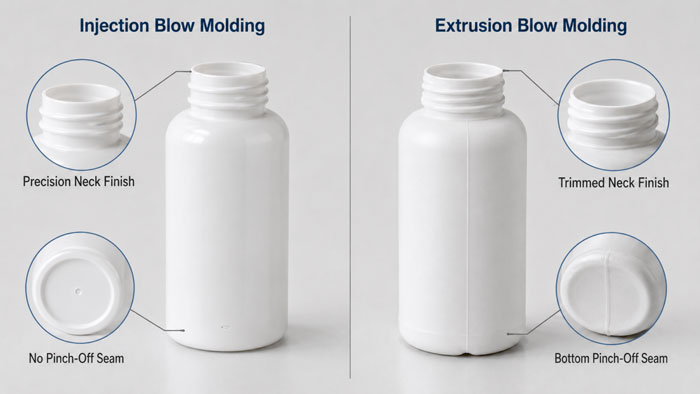
Neck finish affects cap fit, leakage risk and user experience.
Injection molded necks can deliver strong dimensional consistency.
Quality checks should combine neck, wall and leakage performance.
Why Neck Precision Defines the Overall Quality of Blow-Molded Bottles
Introduction
Blow-molded bottles have become indispensable in modern packaging, serving industries ranging from beverages and food to pharmaceuticals and cosmetics. As consumers and manufacturers increasingly prioritize product safety, durability, and usability, the quality standards for blow-molded bottles continue to rise.
Among the numerous factors that determine bottle quality—including material selection, wall thickness uniformity, and surface finish—neck precision stands out as the most critical determinant.
The neck of a blow-molded bottle, though a small component relative to the entire structure, acts as the interface between the bottle and its closure. It directly influences sealing performance, production consistency, structural integrity, and end-user experience.
This article explores why neck precision is the cornerstone of overall blow-molded bottle quality and examines its impact on key performance metrics across packaging industries. :contentReference[oaicite:1]{index=1}
1. Neck precision determines the quality of the seal
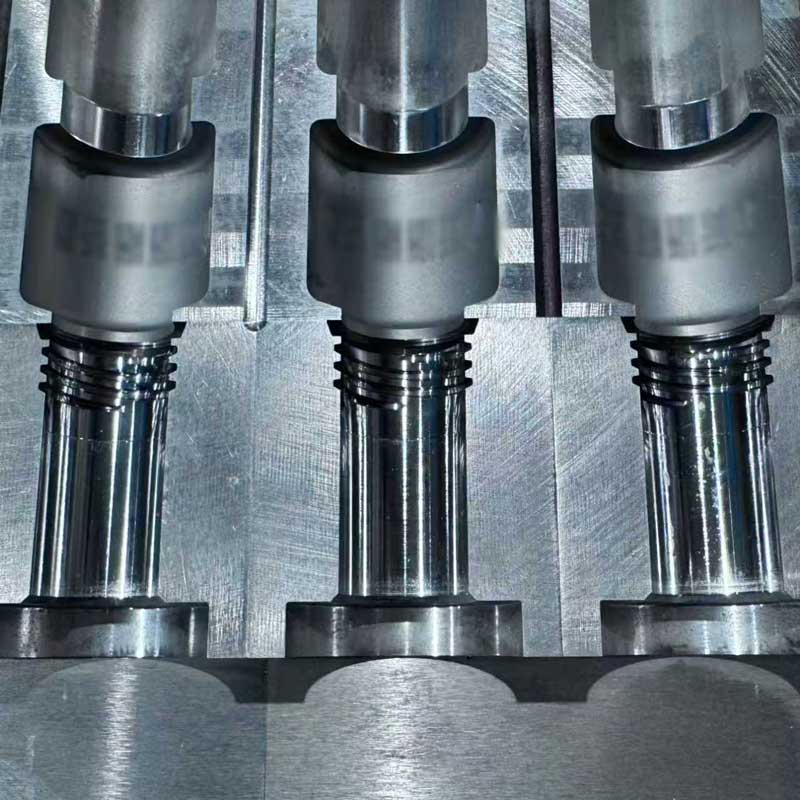
The primary function of a blow-molded bottle’s neck is to form a secure seal with caps, pumps, droppers, or other closures, and this function is entirely dependent on precision.
Sealing integrity is non-negotiable in packaging. Even minor deviations in neck dimensions can lead to leakage, contamination, or product spoilage—consequences that are costly and potentially hazardous, especially for food, beverage, and pharmaceutical products.
Neck precision is defined by tight dimensional tolerances, including:
- outer diameter
- inner diameter
- thread pitch
- neck height
- flatness of the sealing surface
These tolerances are typically controlled within ±0.01 mm to ±0.3 mm, depending on the application.
For example, a deviation of just 0.1 mm in the neck’s inner diameter can prevent a cap from fitting properly. This can result in:
- a loose seal that leaks
- an overly tight seal that is difficult to open
In Injection Blow Molding (IBM), which is widely used for high-precision bottles, seamless necks and precise shaping ensure exact closure fit and reliable sealing. This provides a significant advantage compared with other blow-molding methods.
2. Neck precision determines stable production
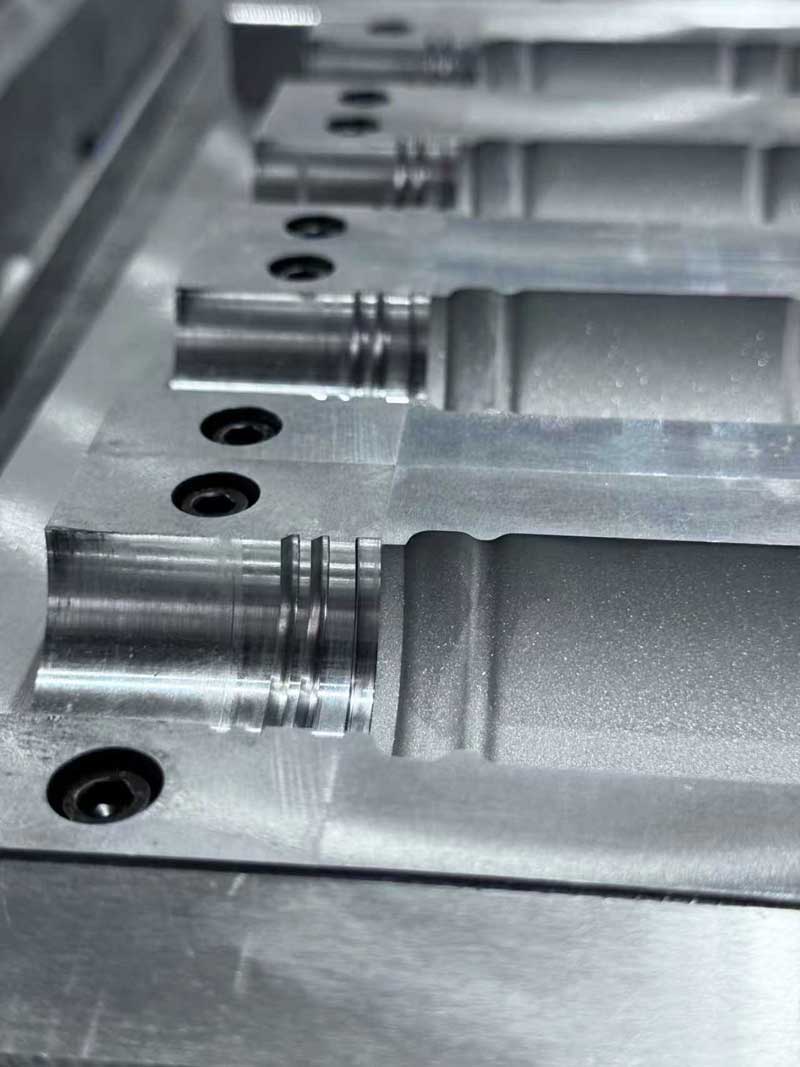
Beyond sealing performance, neck precision is also a direct indicator of production consistency, which is critical for large-scale manufacturing.
Blow molding is a complex process involving:
- melting plastic resin
- extruding or injecting a parison
- inflating it within a mold to form the final bottle shape
The neck is formed first in most blow-molding processes. Any imprecision at this stage can propagate throughout the entire bottle structure.
Possible consequences include:
- uneven wall thickness
- distorted bottle shapes
- inconsistent dimensions between batches
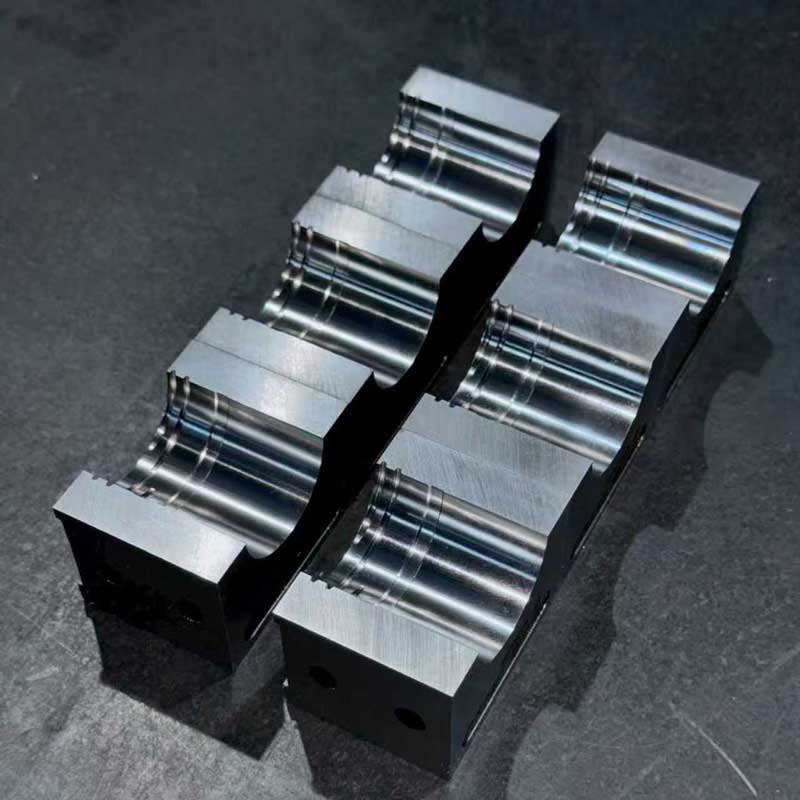
High-precision necks require advanced mold design, with cavity tolerances controlled to IT6–IT7 levels and surface roughness minimized to reduce demoulding resistance and defects.
Molds constructed from high-grade tool steel with wear-resistant coatings maintain dimensional accuracy even after millions of production cycles. This ensures that every bottle produced meets the same specifications.
Without this precision, manufacturers may experience:
- higher rejection rates
- increased material waste
- inconsistent product quality
Structural stability
The neck is also the most stressed part of a blow-molded bottle.
It bears the weight of the bottle and its contents when stacked, as well as the force applied during:
- capping
- opening
- transportation
A precisely formed neck distributes stress evenly and prevents deformation, cracking, or breakage.
By contrast, an imprecise neck—with uneven thickness or distorted threads—creates weak points that may fail during normal use.
One common defect is neck ovality, often caused by uneven cooling or poor material distribution. Oval necks reduce sealing reliability and structural strength.
Proper cooling of the neck area—through optimized mold cooling channels and precise temperature control—is essential to maintain dimensional stability.
3. Customized neck precision can be applied to products in different packing industries

Neck precision also plays an important role in improving user experience and expanding packaging applications across industries.
Beverage Industry
Precise neck dimensions ensure compatibility with standard filling equipment, reducing spillage and improving production efficiency.
Cosmetic and Pharmaceutical Packaging
Cosmetic and pharmaceutical bottles often use pumps, droppers, or spray heads.
Accurate neck geometry ensures these components fit securely and dispense products correctly, preventing leakage and waste.
Industrial Packaging
For containers used to store chemicals or automotive fluids, a precise neck seal prevents hazardous leaks and improves safety.
Supply Chain Efficiency
Consistent neck dimensions also simplify:
- labeling
- packaging
- stacking
This helps streamline the entire supply chain from manufacturing to retail.
4. How can we achieve precise accuracy?
Achieving high neck precision requires advanced equipment, strict quality control, and optimized processing conditions.
Advanced Machine Control
Modern blow-molding machines use servo-driven systems to precisely control extrusion, injection, and blow pressure.
This ensures consistent parison formation and neck shaping.
Real-Time Monitoring
Modern production lines incorporate inspection tools such as:
- vision inspection systems
- ultrasonic thickness gauges
These systems detect deviations in neck dimensions during production and allow immediate adjustments.
Dimensional Testing
Offline testing using Coordinate Measuring Machines (CMM) verifies neck precision and ensures compliance with international standards.
Material Selection
Material properties also affect dimensional stability.
Resins with stable melting behavior and narrow molecular weight distributions reduce shrinkage and dimensional variation, supporting consistent neck precision.
Conclusion
Neck precision is not merely one aspect of blow-molded bottle quality—it is the core factor that determines overall performance.
A precisely formed neck ensures:
- reliable sealing performance
- stable production quality
- strong structural integrity
- compatibility with closure systems
For manufacturers, investing in high-precision molds, advanced machinery, and robust quality control improves reliability, reduces costs, and strengthens market competitiveness.
For consumers, neck precision results in safer, more durable, and easier-to-use packaging products.
As the packaging industry continues to evolve, maintaining and improving neck precision will remain essential for achieving higher standards in blow-molded bottle manufacturing.
Ask About Neck Precision
Victor's engineering team can review bottle drawings, materials, capacity requirements, neck design and automation needs before you choose an IBM configuration.
Send Your Requirements