Why IBM Technology Is Ideal for Eye-Drop Bottles and Nasal Sprayer Containers?
Pharmaceutical packaging cannot tolerate failure. A single defect can compromise patient safety. Injection blow molding provides the precision and reliability these sensitive products demand.
IBM is ideal for eye-drop and nasal spray containers because it creates seamless, sterile, and dimensionally perfect bottles in one step. This process ensures integrity for drug compatibility, enables precise dosing features, and supports reliable mass production.
The choice of manufacturing technology directly impacts product performance. Let's examine the three key reasons IBM stands out for these critical applications.
How Does IBM Ensure Sterility and Integrity?
Leaks and contaminants are unacceptable in medical packaging. These flaws risk product spoilage and patient harm. IBM technology inherently designs out these failure points from the start.
IBM ensures sterility and integrity by producing a seamless, one-piece container. This eliminates side seams where leaks and bacteria could hide. The process also allows for consistent wall thickness and material purity, which are vital for drug compatibility and barrier properties.
Building a Barrier Against Contamination
The sterility of a pharmaceutical container is non-negotiable. It is not just about initial cleanliness. It is about maintaining a protective barrier throughout the product's shelf life. Traditional container manufacturing methods can create weak points. IBM addresses this challenge through its fundamental mechanics.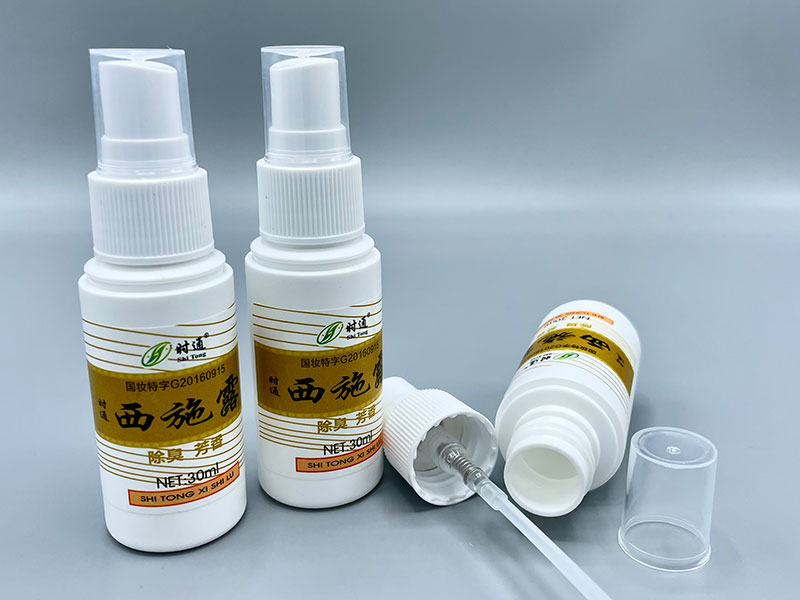
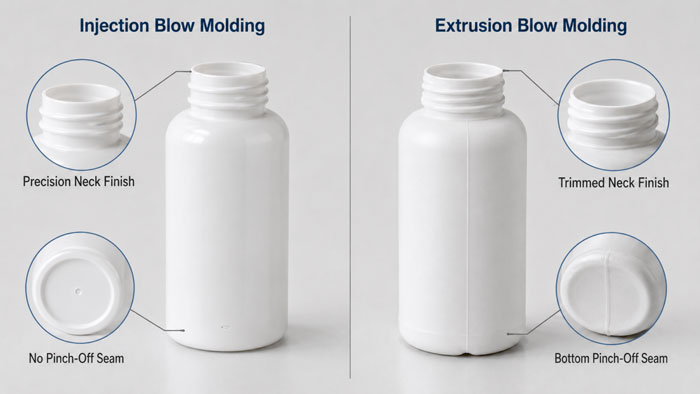
First, consider the container structure. Many bottles are made in two parts and joined together. This creates a seam. Even a perfect seam is a potential failure point. IBM forms the entire bottle in a single, closed operation. The plastic parison is injected into a mold and then blown into its final shape. The result is a monolithic container with no welded or glued seams. This seamless design is the first and strongest defense against leakage and microbial ingress.
Second, we must talk about material consistency. The injection phase of IBM forces molten plastic into a precise preform mold under high pressure. This action does more than shape the plastic. It also ensures the material is densely packed without voids or weak spots. A consistent molecular structure throughout the container wall provides reliable barrier properties. This is crucial for protecting sensitive solutions from oxygen or moisture.
Third, the process supports critical finishes. The neck finish of an eye-drop bottle must be perfect. It must accept a dropper tip or a spray pump without any gaps. IBM molds this finish directly into the container with extreme accuracy. The threads and sealing surfaces are formed in the same step as the bottle body. This creates a flawless interface for the closure system, guaranteeing a hermetic seal.
Here is a breakdown of how IBM’s features combat specific risks:
| Risk Factor | Conventional Container Weakness | IBM’s Solution |
|---|---|---|
| Leakage | Potential at side seams or base weld. | Seamless, one-piece construction eliminates joining points. |
| Microbial Ingress | Cracks or pores in thin wall sections. | Uniform wall thickness and dense material packing reduce porosity. |
| Seal Failure | Imperfect neck finish leads to poor closure fit. | High-precision molded neck finish ensures perfect closure mating. |
| Material Degradation | Inconsistent walls can lead to stress points. | Homogeneous structure provides even barrier and strength. |
I have reviewed quality reports from manufacturers. One report compared leak rates between different bottle types. The leak rate for seamless IBM bottles was statistically zero in stability testing. For bottles with side seams, there was always a small but measurable failure rate over time. This data proves that the integrity built into an IBM container is not just a claim. It is a measurable advantage.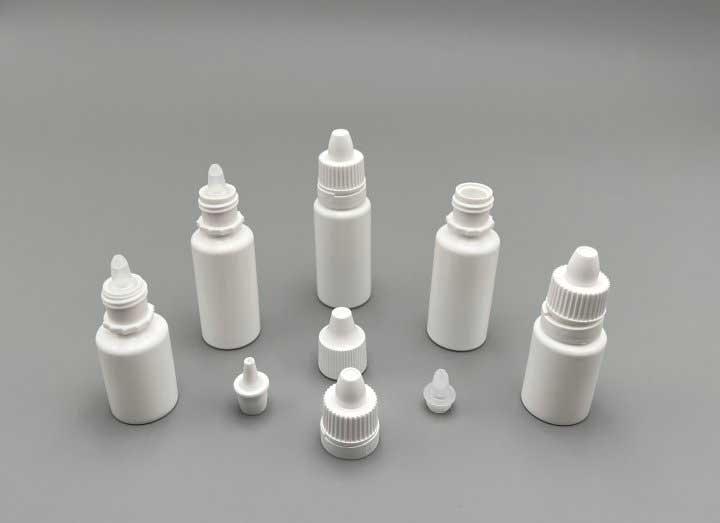
How Does IBM Solve Dosing and Usability Challenges?
Inaccurate doses and difficult-to-use bottles frustrate patients. Poor design can lead to medication errors. IBM allows designers to engineer solutions directly into the container itself.
IBM solves dosing and usability challenges by enabling ultra-precise neck finishes and consistent internal volumes. It can also form ergonomic shapes for better grip and controlled squeezing, ensuring each drop or spray delivers the intended dose.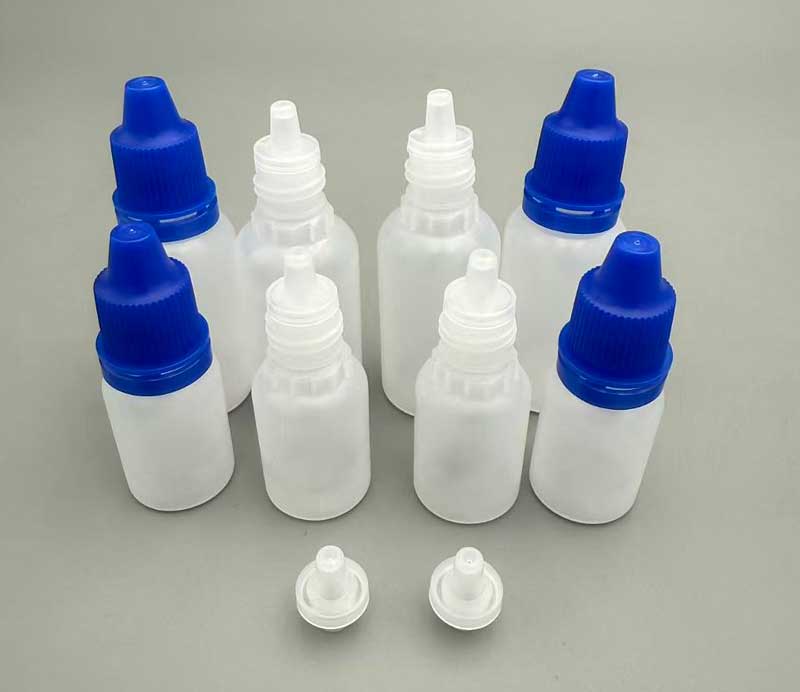
Engineering for Patient-Centric Performance
A pharmaceutical container is a drug delivery device. Its performance is as important as the drug inside. Patients, especially the elderly or those with limited dexterity, need containers that work with them, not against them. IBM provides the toolset to make this possible.
The foundation of accurate dosing is consistency. Every bottle must hold the same volume and deliver the same amount of liquid per drop or spray. IBM achieves this through process control. The injection phase meters an exact amount of plastic into the preform mold. This control directly influences the final internal volume of the bottle. When the blowing phase uses consistent pressure and timing, the result is a set of bottles with nearly identical capacities. This volumetric consistency is the first step to dose consistency.
Next, we have the interface: the neck. The fit between the bottle neck and the dropper or spray pump is critical. A loose fit can cause leaks or air ingress. A poor fit can change the actuation force of a spray pump. IBM molds the neck finish to tolerances measured in hundredths of a millimeter. This precision ensures that every closure fits the same way on every bottle. For a spray pump, this means the spray pattern and droplet size remain consistent from the first use to the last.
Finally, IBM enables functional ergonomics. The mold can be designed to create bottles with finger grips, textured surfaces, or flattened sides. These features are not just for branding. A better grip gives patients more control when squeezing an eye-drop bottle. This control helps them administer a single drop instead of a stream. For nasal sprayers, an ergonomic shape aids in correct positioning and comfortable use.
Consider the specific design features IBM can incorporate:
| Usability Challenge | Patient Pain Point | IBM Design Solution |
|---|---|---|
| Inconsistent Drop Size | Under- or over-dosing. | Precise neck finish ensures consistent dropper tip fit and orifice. |
| Difficult to Squeeze | Especially for arthritis sufferers. | Contoured body with grip panels or ribbing reduces required force. |
| Slippery When Wet | Loss of control, product waste. | Textured surface patterns molded into the bottle sides. |
| Poor Spray Control | Unpredictable dose or direction. | Perfectly perpendicular and smooth neck seat for pump actuator. |
I remember talking to a designer for a new prescription eye-drop. They needed a bottle that could be used easily by patients with glaucoma, who often have reduced vision and hand strength. Using IBM, they created a unique oval-shaped bottle with clear tactile markers. The shape naturally indicated the squeezing direction. The markers helped patients find the dropper tip. This simple, molded-in design directly improved patient compliance and safety.
How Does IBM Support Scalability and Supply Chain Confidence?
A brilliant drug package is useless if you cannot make millions of identical copies. Scaling production often reveals hidden flaws in a manufacturing process. IBM provides a stable foundation for growth.
IBM supports scalability and supply chain confidence through high-speed, repeatable production and incredibly low defect rates. Once the mold is perfected, it can produce millions of identical containers with minimal variation, ensuring a reliable supply of quality-critical components.
From Prototype to Global Supply
The journey from a laboratory prototype to a shelf-ready product is long. Any uncertainty in the manufacturing process creates risk. Pharmaceutical companies need absolute confidence in their packaging suppliers. IBM technology builds this confidence through its inherent consistency and efficiency.
The scalability story begins with the mold. An IBM production mold is a masterpiece of precision engineering. It is machined from high-grade steel to exact specifications. This initial investment is significant. However, this mold becomes the source of all consistency. Once it is installed in a machine and the process parameters are set, every cycle replicates the last. The first bottle and the one-millionth bottle are functionally identical. This repeatability is the bedrock of supply chain confidence. It means quality checks can be predictive rather than reactive.
Next, we must consider production speed and yield. IBM is a high-speed process. Modern machines can produce tens of thousands of units per day. More importantly, the process is clean and controlled. There is no trimming of flash or secondary welding that can introduce defects. The defect rate for a well-tuned IBM process is exceptionally low. High yield means less waste of valuable drug product and packaging materials. It also means production schedules are reliable. When you order a million bottles, you know you will get a million usable bottles on time.
Finally, IBM fits into a quality-focused supply chain. The process data is easy to monitor. Machine parameters like injection pressure, cycle time, and temperature are constantly recorded. This data provides a verifiable audit trail. If a question ever arises about a production batch, the data can show that the process was in control. This level of traceability is highly valued in pharmaceutical manufacturing.
Let's compare the scalability attributes of IBM against common alternatives:
| Scalability Requirement | Challenge with Some Methods | IBM’s Advantage |
|---|---|---|
| Mass Production Volume | Lower cycle speeds or manual steps limit output. | Fully automated, high-speed cyclic process suitable for 24/7 runs. |
| Consistent Quality | Dimensional drift over time or between production lines. | Mold-based replication ensures part-to-part and batch-to-batch consistency. |
| Low Defect Rate | High scrap from secondary operations like trimming. | Near-net-shape process minimizes post-processing and associated defects. |
| Regulatory Compliance | Difficulty documenting a variable process. | Stable process with digital parameter logging supports full traceability. |
A supply chain manager for a large generic drug company shared their experience with me. They were launching a major nasal spray product. They chose an IBM container supplier. During the peak demand season, they needed a sudden 50% increase in bottle supply. Because the IBM process was so stable and automated, the supplier could ramp up production immediately without any quality qualification delays. The new bottles were identical to the old ones. This reliability turned a potential supply crisis into a non-event. It showed me that in pharmaceuticals, the best packaging technology is the one you never have to worry about.
Conclusion
IBM technology delivers the safety, precision, and reliability essential for sensitive pharmaceutical packaging like eye-drop bottles and nasal sprayers.