Why Neck Finish Accuracy Matters in Injection Blow Molded Bottles
In injection blow molded bottles, the neck finish is one of the most important areas of the product. Although bottle appearance, wall thickness, transparency, and weight are often discussed, the neck finish directly affects sealing performance, filling efficiency, cap compatibility, and final product reliability.
For industries such as pharmaceuticals, cosmetics, food, personal care, and laboratory packaging, even a small deviation in the neck area can lead to leakage, poor capping, contamination risk, or rejection during downstream production.
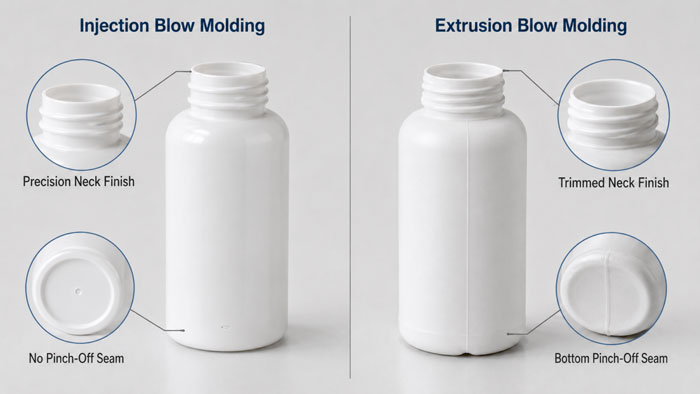
Injection blow molding is widely used for producing small and medium-sized bottles with high dimensional accuracy. Compared with extrusion blow molding, the injection blow molding process forms the neck and thread area during the injection stage. This gives the process a natural advantage in neck finish precision, making it highly suitable for bottles that require accurate sealing and consistent dimensions.
The Role of Neck Finish in Bottle Performance
More Than Just a Thread
The neck finish includes the bottle mouth, sealing surface, thread, support ring, inner diameter, outer diameter, and sometimes tamper-evident or snap-fit structures.
These details may look small, but they determine how well the bottle works with caps, droppers, pumps, plugs, liners, or filling equipment.
For example:
- Eye drop bottles require precise matching with caps and nozzles to prevent leakage.
- Reagent bottles must seal tightly to avoid evaporation or contamination.
- Cosmetic bottles need smooth operation with pumps or screw caps while maintaining a premium user experience.
In every case, neck finish accuracy is essential.
Sealing Starts at the Neck
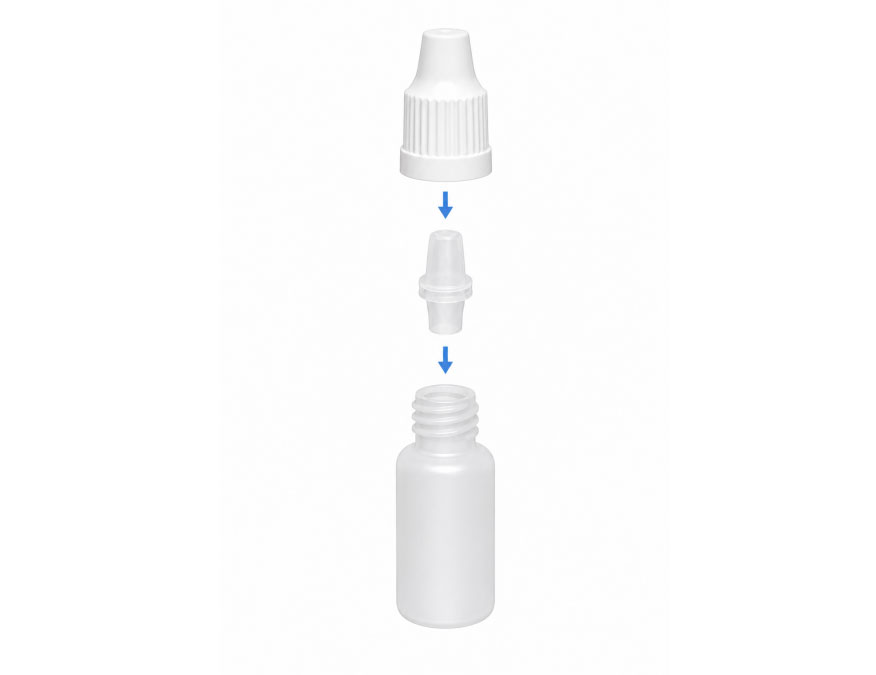
A bottle can only protect its contents if the closure system works correctly. The sealing surface must be flat, smooth, and dimensionally stable.
If the neck is too high, too low, out of round, or uneven, the cap may not apply even pressure, leading to leakage during storage, transportation, or use.
For pharmaceutical and medical packaging, poor sealing may expose products to air, moisture, or microorganisms, affecting product safety, shelf life, and customer confidence.
Why Injection Blow Molding Supports Accurate Neck Finishes
Neck Area Formed by Injection Molding
One major advantage of injection blow molding is that the neck finish is formed during the injection molding stage—not during blowing.
The molten plastic is injected around the core rod into a precision injection mold, where the threads, bottle mouth, and sealing surface are formed before the preform moves to the blowing station.
Because the neck is not stretched during blowing, its dimensions remain highly stable. This makes injection blow molding especially suitable for:
- Pharmaceutical bottles
- Eye drop bottles
- Tablet bottles
- Cosmetic containers
- Laboratory bottles
Stable Core Rod Positioning
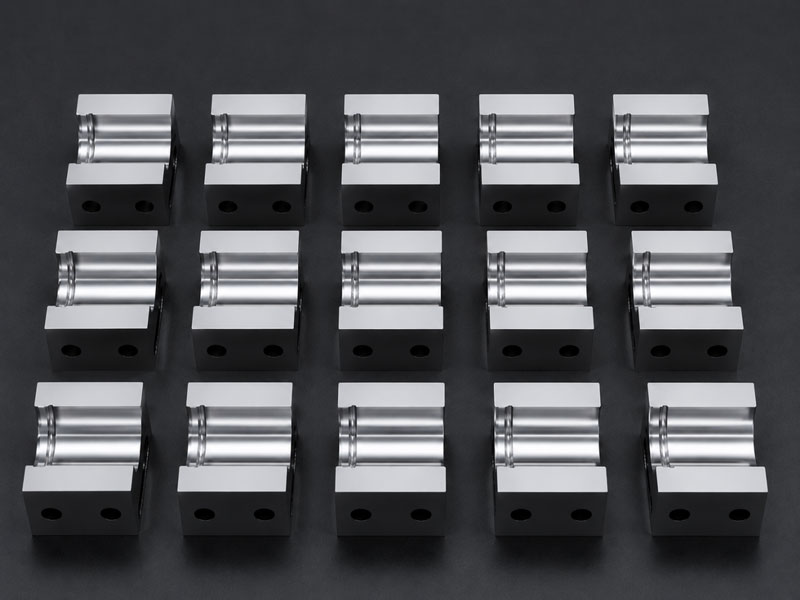
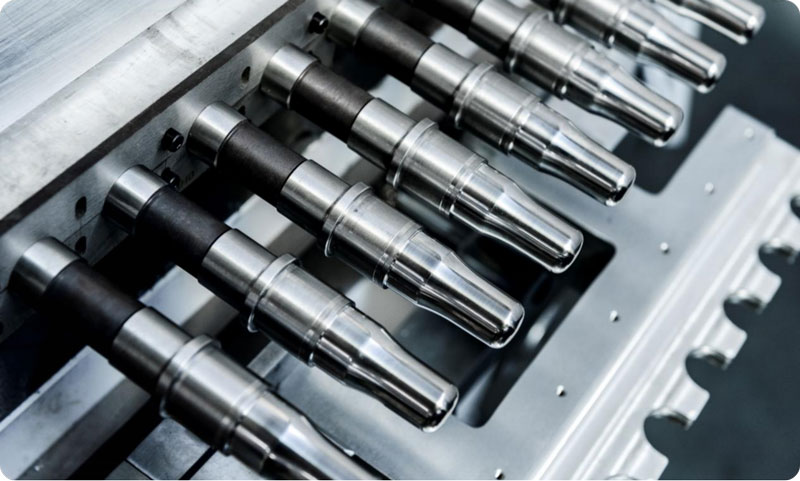
The core rod forms the inner neck diameter and supports the preform during transfer and blowing.
If positioning is inaccurate, problems such as inconsistent wall thickness, incorrect inner diameter, or poor concentricity may occur.
High-quality injection blow molding machines rely on:
- Precise mechanical guidance
- Reliable indexing systems
- Servo-controlled movement
- Stable mold clamping
These ensure consistent neck finish accuracy across every cavity and production cycle.
Common Neck Finish Problems in Bottle Production
Leakage and Poor Cap Fit
One of the most common consequences of poor neck finish accuracy is leakage.
Problems occur when:
- Sealing surfaces are uneven
- Threads are incomplete
- Neck diameters fall outside tolerance
Although the cap may appear tight during assembly, it can fail under pressure, vibration, or temperature changes.
Poor thread consistency may also cause:
- Cross-threading
- Tilted caps
- Incorrect torque
- Lower production efficiency
- Higher rejection rates
Flash, Deformation, and Ovality
Flash around the bottle mouth or threads may:
- Interfere with sealing
- Create sharp edges
- Increase contamination risks
Deformation and ovality can also prevent caps or plugs from fitting correctly.
These problems are often caused by:
- Mold wear
- Poor clamping accuracy
- Unstable injection pressure
- Temperature fluctuation
- Core rod misalignment
Inconsistent Cavity Performance
Multi-cavity molds improve productivity, but inconsistent neck quality between cavities can produce bottles with different sealing performance.
Reliable production requires:
- Balanced injection
- Stable temperature control
- Accurate core rod positioning
- Repeatable transfer movement
Practical Applications Where Neck Accuracy Is Critical
Medical and Pharmaceutical Bottles

Medical packaging demands some of the strictest neck finish tolerances.
Applications include:
- Eye drop bottles
- Nasal spray bottles
- Reagent bottles
- Sample containers
Poor neck accuracy may lead to:
- Leakage
- Contamination
- Unstable dosing
- Reduced product safety
Cosmetic and Personal Care Bottles
Cosmetic packaging depends heavily on accurate neck finishes.
Bottle closures include:
- Pumps
- Sprayers
- Flip-top caps
- Screw caps
- Inner plugs
A poor neck finish may cause:
- Shipping leakage
- Cap misalignment
- Uneven appearance
- Customer complaints
Food, Beverage, and Laboratory Containers
Accurate neck finishes improve:
- Sealing performance
- Storage stability
- Leak resistance
- User experience
For laboratory containers, precision helps prevent contamination and evaporation.
For food packaging, it helps avoid leakage during transportation.
How Manufacturers Can Improve Neck Finish Accuracy
Control Injection and Temperature Stability
Stable processing conditions are essential.
Key factors include:
- Injection pressure
- Melt temperature
- Holding pressure
- Cooling consistency
Proper control ensures:
- Complete thread formation
- Smooth sealing surfaces
- Stable shrinkage
Maintain Mold and Core Rod Precision
Regular inspection and maintenance are essential.
Manufacturers should routinely check:
- Injection molds
- Neck inserts
- Core rods
Cleaning and preventive maintenance help maintain dimensional stability and extend mold life.
Choose a Machine with High Repeatability
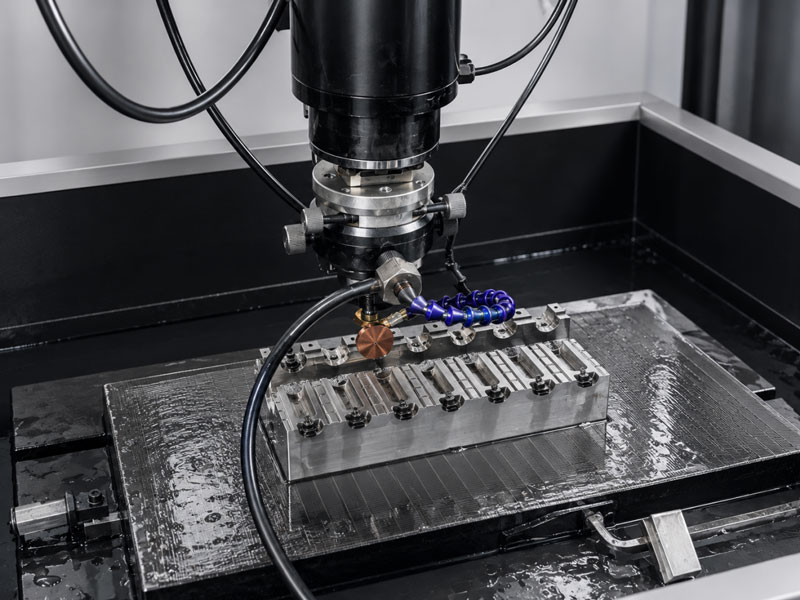
Machine repeatability is just as important as mold quality.
Critical features include:
- Accurate clamping
- Stable transfer
- Precise core rod rotation
- Controlled injection movement
For high-precision bottle production, manufacturers should choose machines designed for accurate positioning and long-term stability.
Conclusion
Neck finish accuracy is a critical factor in injection blow molded bottle quality.
It directly affects:
- Sealing performance
- Cap compatibility
- Leakage prevention
- Filling efficiency
- Product reliability
Injection blow molding naturally offers excellent neck accuracy because the neck is formed during the injection stage and remains dimensionally stable during blowing.
Combined with precision molds, accurate core rod positioning, stable machine movement, and controlled processing conditions, manufacturers can consistently produce bottles with reliable sealing performance and excellent dimensional consistency.
For companies producing high-quality bottles, neck finish accuracy is far more than a technical detail—it is fundamental to product safety, manufacturing efficiency, and brand reputation.