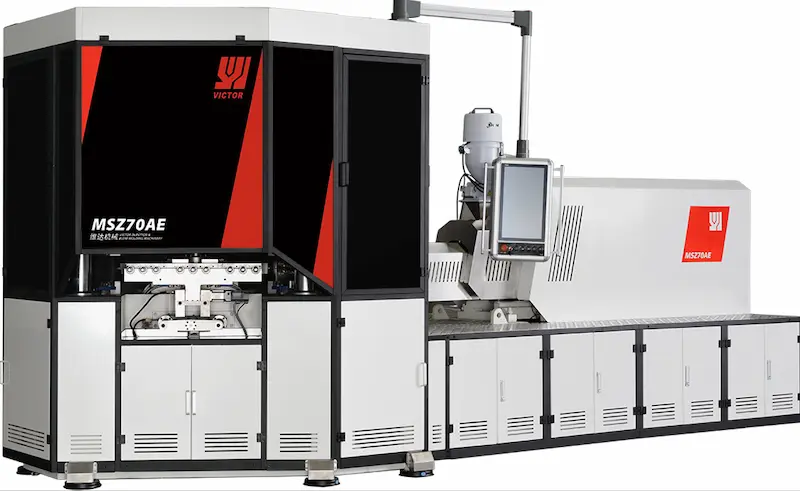
Many manufacturers are stuck with outdated machinery. This equipment wastes energy and limits quality. All-electric injection blow molding machines solve these problems with superior technology.
All-electric IBM machines are the future because they offer unmatched precision, lower long-term costs, and align with sustainable, smart manufacturing goals. Their servo-driven systems provide exceptional control for high-quality packaging, making them a superior investment over traditional hydraulic models.
The shift to all-electric is not just a trend. It is a fundamental upgrade. Let me explain the three key reasons why this technology is setting the new standard.
Unmatched Precision and Consistency: How Do All-Electric Drives Deliver Superior Control?
Hydraulic machines often struggle with subtle variations. These inconsistencies lead to product defects and material waste. All-electric drives eliminate this issue by providing direct, digital control over every movement.
All-electric drives deliver superior control through precise servo motors. Each axis operates independently with exact positioning and repeatability. This results in perfect parison control, uniform wall thickness, and highly consistent container weights, which is critical for high-end packaging.
The Mechanics of Precision
Traditional hydraulic machines rely on oil and pump systems, which are affected by pressure fluctuations and temperature changes. These factors cause small but meaningful variations in machine movement.
All-electric machines use servo motors to control each mechanical axis, with digital signals ensuring extremely accurate execution.
The advantages are seen in three key areas:
-
Parison Control:
Ensures identical length and thickness every cycle thanks to precise screw speed and position control. -
Clamp and Mold Movement:
Servo-driven platen movements protect molds and deliver consistent dimensions. -
Repeatability:
Digital control guarantees predictable, repeatable results for thousands of cycles.
Control Comparison
| Control Parameter | Hydraulic IBM Machine | All-Electric IBM Machine |
|---|---|---|
| Screw Speed Control | Good but affected by oil conditions | Excellent. Accurate digital RPM control |
| Position Repeatability | Acceptable but influenced by leaks/wear | Exceptional with servo encoder feedback |
| Response Time | Slower, valve-dependent | Fast electronic signal response |
| Energy Consumption per Cycle | High — pump runs constantly | Low — motors run only when needed |

A cosmetics packaging client who switched to all-electric saw a 60% reduction in weight variation defects — a level of stability impossible with hydraulics.
Beyond Green: Why Is Lower Total Cost of Ownership the Real Game-Changer?
Many view all-electric machines mainly as an environmental option, but their true financial impact lies in long-term savings. They significantly reduce energy, maintenance, and cooling costs, making them far more cost-effective over the machine’s lifecycle.
Calculating the True Cost
Although the upfront price of an all-electric IBM machine may be higher, the total cost over 5–10 years strongly favors all-electric.
Cost Breakdown
-
Energy Costs:
Hydraulic pumps run continuously; servo motors use power only during movement. Energy savings can offset the price difference within 2–3 years. -
Maintenance Costs:
No pumps, valves, hoses, filters, or hydraulic oil. Fewer failures, less downtime, and lower service costs. -
Cooling Costs:
Hydraulics generate heat requiring additional chilling; all-electric machines operate cooler and lower the cooling load.
A plant manager once told me they regretted choosing hydraulics because maintenance downtime and energy consumption quickly wiped out the “savings” from the lower purchase price.
Future-Proofing Production: How Do ESG and Smart Manufacturing Align with All-Electric IBM?
Factories today must balance sustainability expectations with increasing automation demands. All-electric IBM machines meet both objectives.
All-electric IBM aligns with ESG and smart manufacturing by delivering low carbon emissions, real-time digital monitoring, and enhanced safety — all essential for modern operations.
1. ESG Alignment
- Environmental: Lower electricity consumption, no hydraulic oil, reduced carbon emissions.
- Social: Cleaner and quieter workshop environments, improving worker well-being.
- Governance: Adopting advanced, efficient equipment reflects responsible, forward-thinking leadership.
2. Smart Manufacturing Readiness
All-electric systems are digitally driven from the ground up, making them ideal for Industry 4.0 integration.
- Data Collection: Each cycle's energy and performance data is available.
- Predictive Maintenance: Servos enable early detection of wear and issues.
- MES Integration: Machines easily connect to factory-wide monitoring systems.
Practical Advantages
| Future-Proofing Goal | How All-Electric IBM Supports It |
|---|---|
| Reduce Scope 2 Emissions | Much lower kWh per part |
| Remove Hazardous Materials | Zero hydraulic oil |
| Enable Data-Driven Decisions | Real-time servo and energy data |
| Remote Monitoring | Cloud or MES connectivity |
| Worker Safety | Clean, cool, quiet environment |

An audited factory once used live energy-use reports from their all-electric machines to demonstrate ESG compliance — the auditors were impressed, and the factory passed with ease.
Conclusion
All-electric IBM machines deliver the unmatched precision, operational savings, and sustainability advantages that modern packaging manufacturers need. They aren’t just an upgrade — they are the new standard for high-precision, high-efficiency production.