Technical News
How to Extend the Service Life of Injection Blow Molds
Injection blow molds directly influence bottle quality, production stability, and long-term operating cost. For manufacturers running IBM equipment, mold life is not only a tooling issue - it is a production efficiency issue.
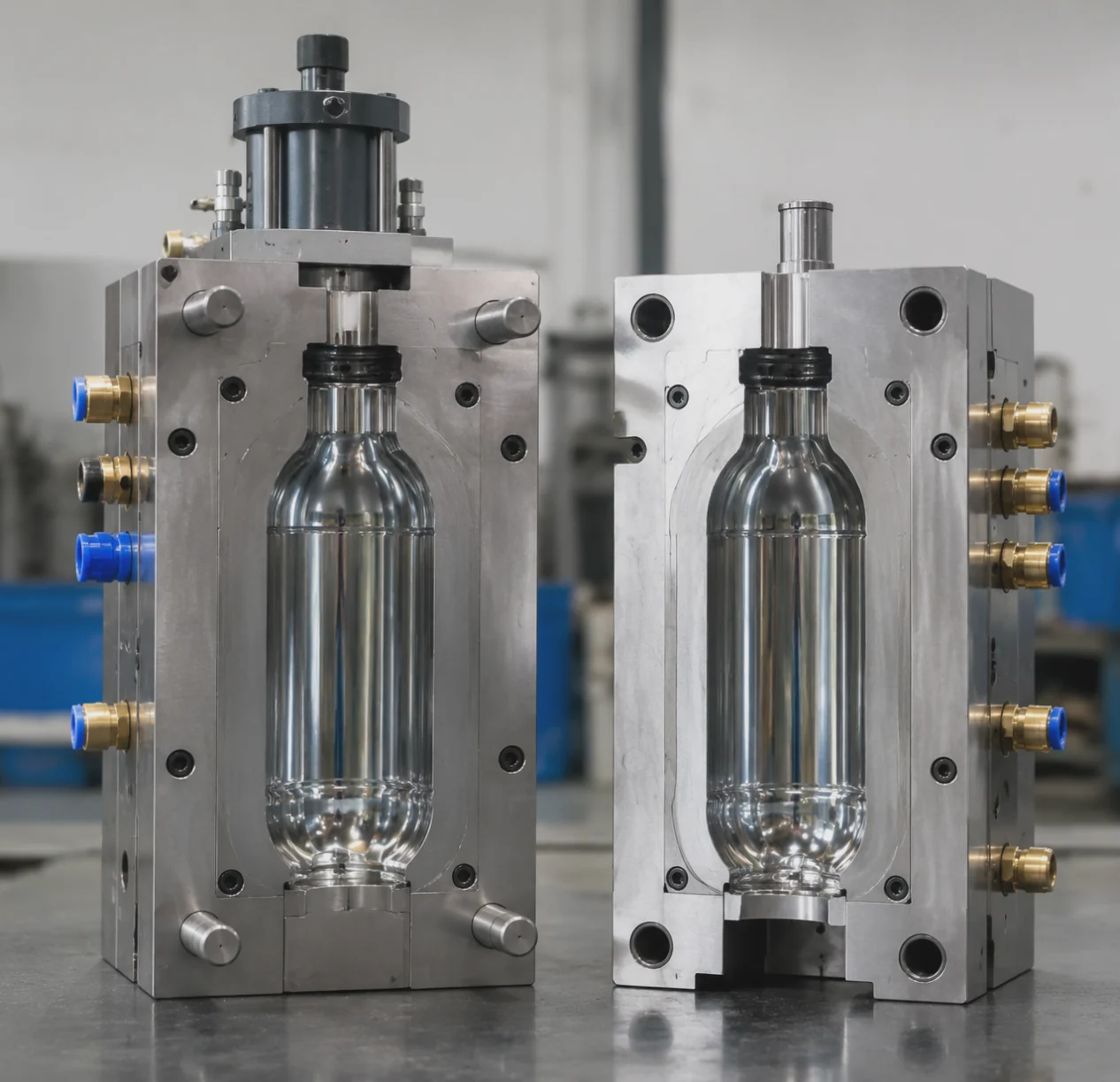
Why Mold Service Life Matters in IBM Production
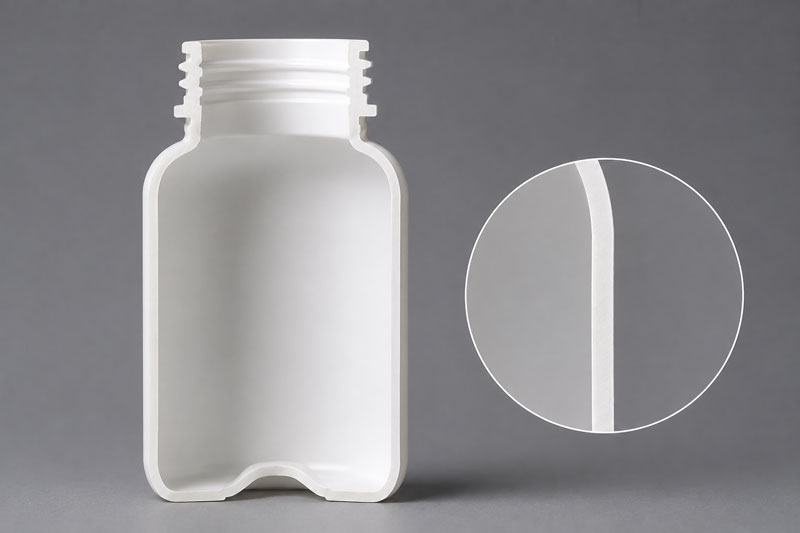
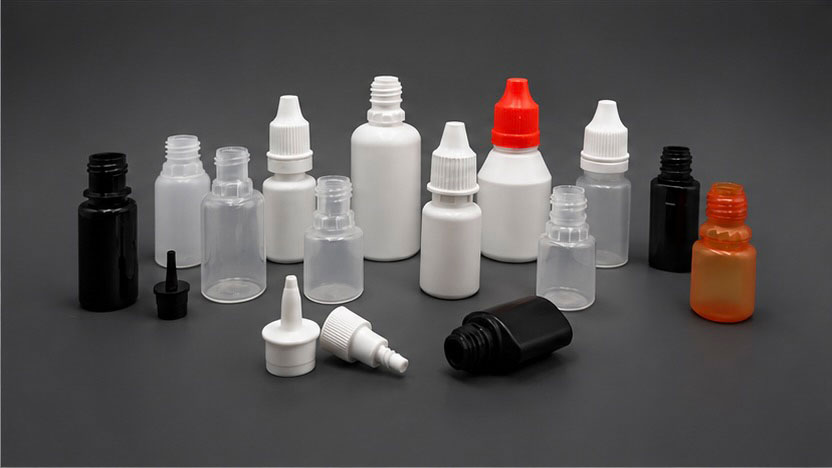
Injection blow molding is widely used to manufacture hollow plastic products such as bottles, jars, and containers. In this process, the mold is one of the most critical production assets. It shapes the bottle, controls dimensional accuracy, affects surface finish, and determines how consistently the line can run over time.
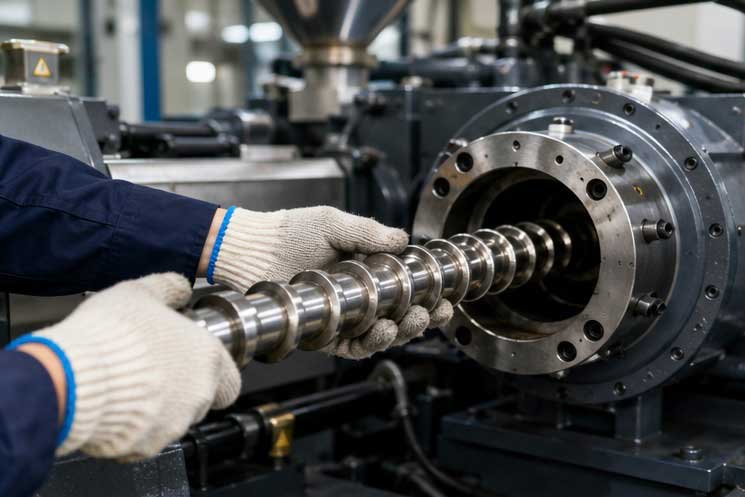
Because injection blow molds operate under high pressure, elevated temperature, repetitive clamping force, and cyclic mechanical movement, they naturally face wear and fatigue. Extending mold service life requires coordinated decisions across mold design, steel selection, surface treatment, machine operation, and preventive maintenance.
Engineering takeaway
The best way to extend mold life is to reduce stress before production starts, then keep the mold clean, lubricated, inspected, and properly documented throughout its service cycle.
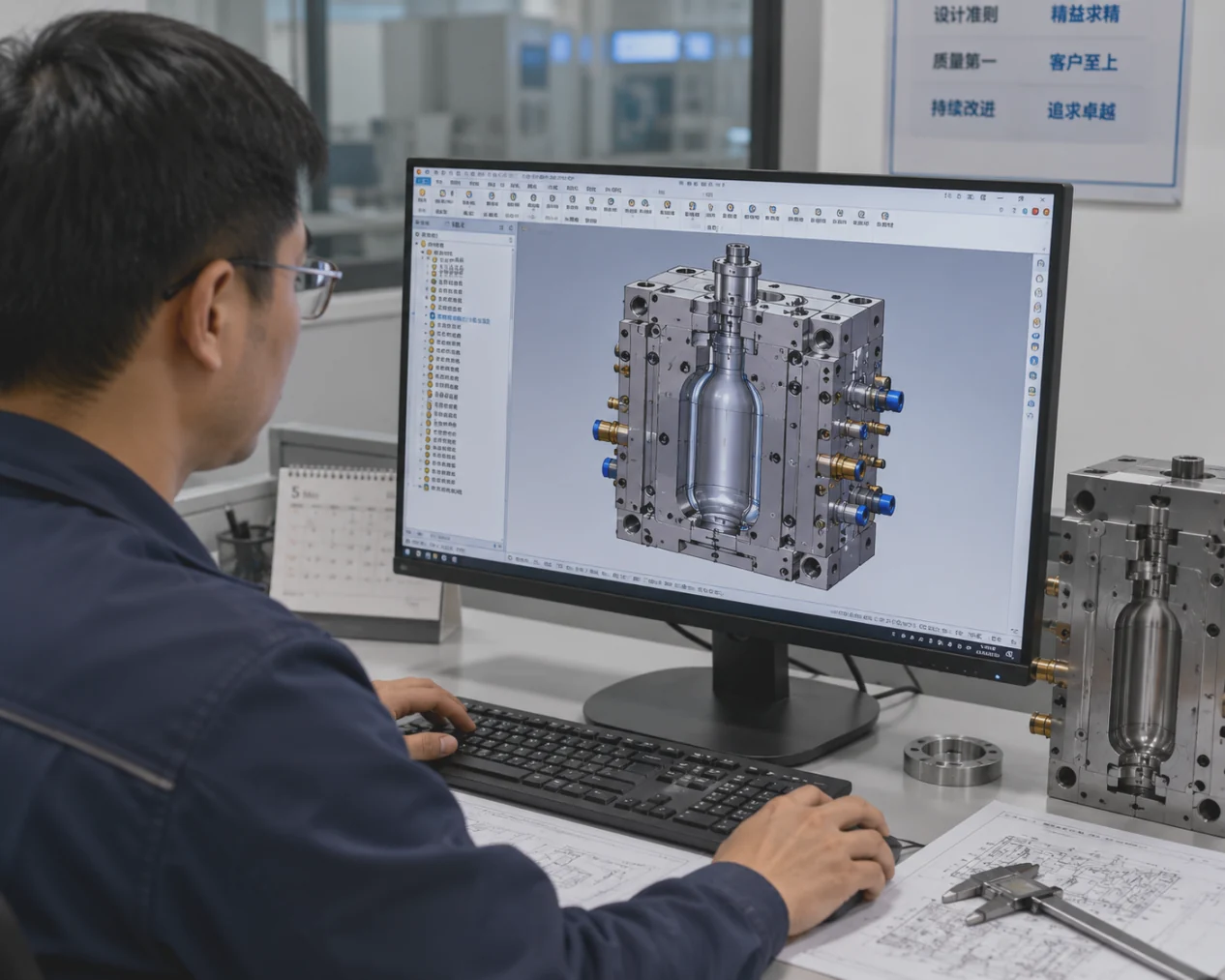
1. Optimize Mold Design for Long-Term Performance
A durable mold starts with a design that distributes pressure evenly and reduces local stress. Poorly designed molds can accelerate wear, create uneven filling, increase thermal fatigue, and lead to premature failure.
2. Select the Right Mold Steel and Surface Treatment
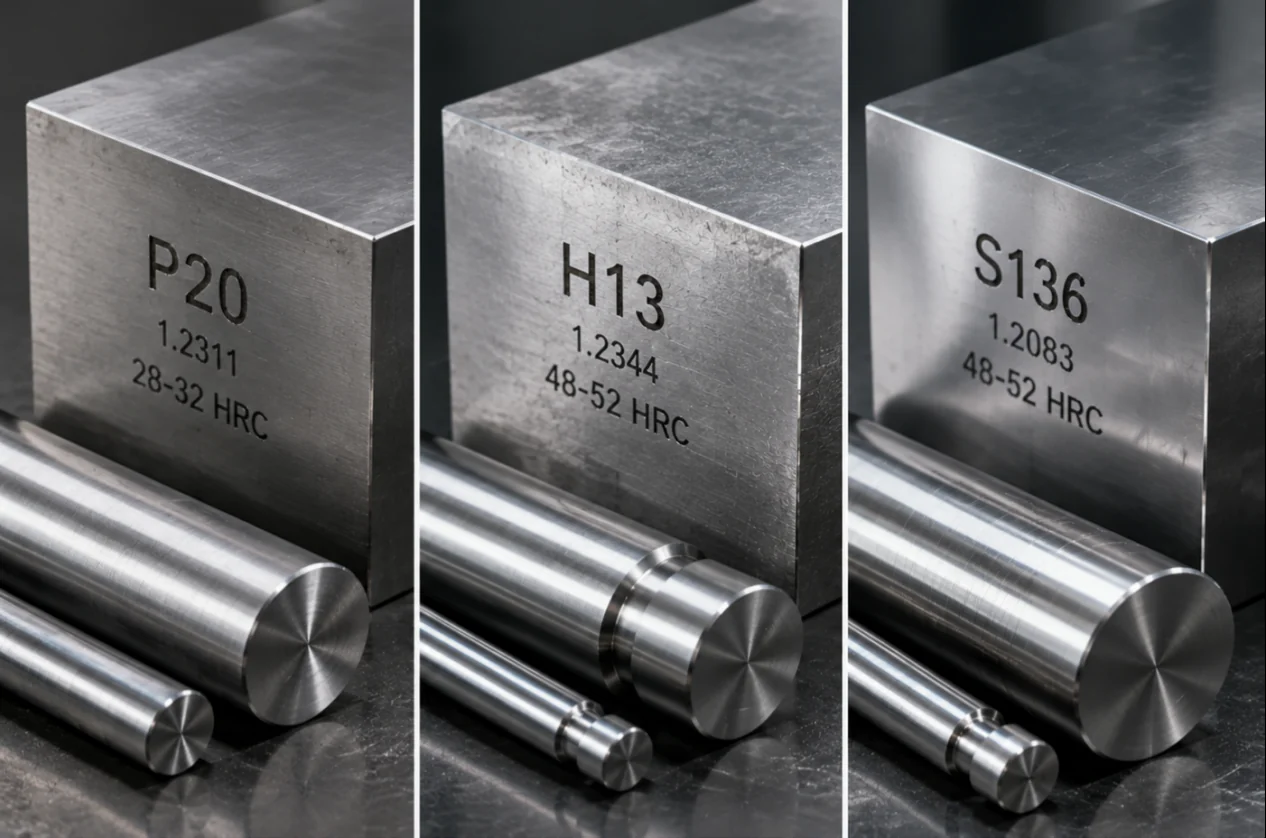
Material selection has a direct impact on wear resistance, corrosion resistance, polishing quality, and fatigue life. High-grade mold steels such as P20, H13, and S136 are commonly used for injection blow molds because they offer a practical balance of toughness, hardness, machinability, and thermal fatigue resistance.
| Treatment | Main Benefit | Typical Use Area |
|---|---|---|
| Nitriding | Improves surface hardness and wear resistance under repeated contact. | Core rods, parison molds, high-wear sliding or contact zones. |
| Chromium plating | Improves corrosion resistance and makes surface cleaning easier. | Cavity surfaces where cleanliness and surface stability are important. |
| PVD coating | Provides high hardness and lower friction for demanding wear areas. | Selected high-load or high-cycle components. |
| Polishing | Reduces friction, resin adhesion, and surface defects on molded parts. | Visible product surfaces and precision bottle cavities. |
Do Not Overlook Heat Treatment
Proper heat treatment ensures uniform hardness and sufficient core strength. This helps prevent cracking under cyclic loading and high temperature. For long production runs, stable heat treatment is often as important as steel grade itself.
3. Build a Regular Maintenance and Care System
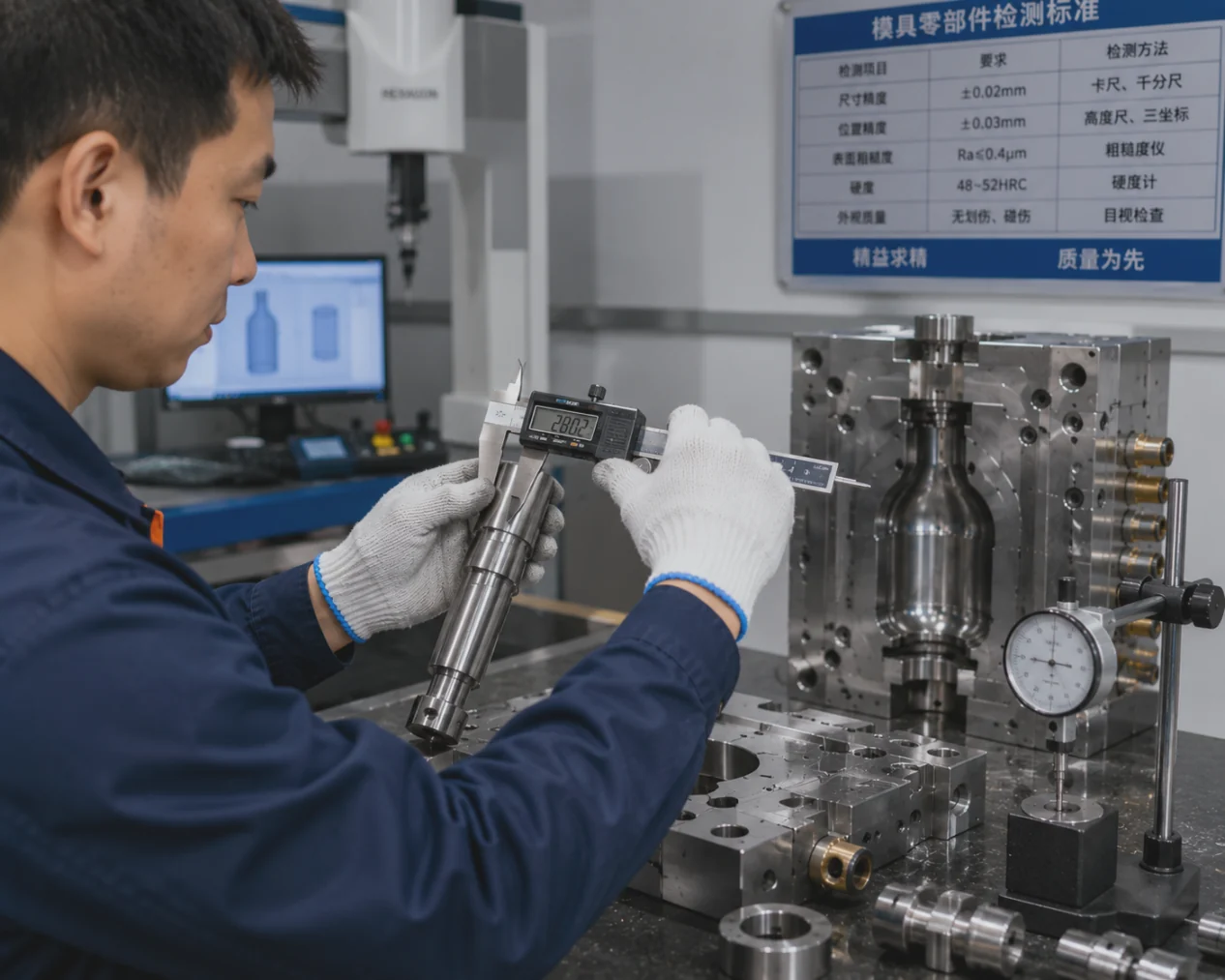
Even a well-designed mold needs disciplined care. Routine maintenance prevents residue buildup, detects wear early, protects moving components, and keeps production quality stable across repeated cycles.
Keep Maintenance Records
Maintenance logs are valuable production data. Recording cleaning dates, polishing, part replacement, abnormal wear, and repair history helps teams predict mold performance and plan preventive actions instead of reacting to sudden failure.
4. Control Operating Conditions During Production
Mold life is not determined by mold design alone. Incorrect processing temperature, excessive clamping force, poor cooling balance, or unstable resin conditions can accelerate wear. Operators should keep processing parameters within validated ranges and avoid forcing output at the expense of tooling stability.
- Maintain stable melt temperature and avoid overheating the resin.
- Use correct clamping force and avoid unnecessary mechanical load.
- Keep cooling channels clean to prevent local overheating.
- Stop production for inspection when repeated defects appear in the same cavity area.
- Train operators to report abnormal sound, surface marks, leakage, or movement resistance early.
Conclusion
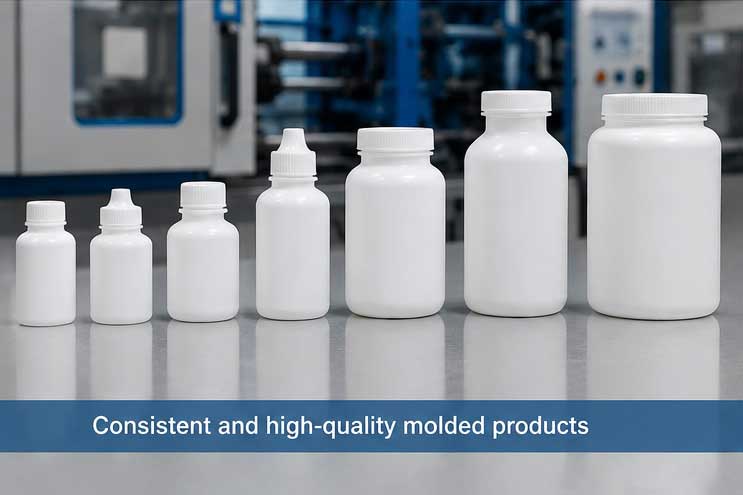
Extending the service life of injection blow molds is a practical combination of intelligent design, suitable mold steel, proper surface treatment, stable production parameters, and disciplined maintenance. When these elements work together, manufacturers can reduce mold wear, improve bottle consistency, and avoid costly unplanned downtime.
For packaging manufacturers planning a new bottle project, mold life should be evaluated early together with machine model selection, cavity count, bottle material, output target, and maintenance accessibility.
Need Help Evaluating an IBM Mold Project?
Send Victor your bottle drawing, resin grade, target output, neck design, and mold cavity requirement. Our engineering team can help review mold structure, machine compatibility, and production feasibility.