What this guide helps you decide
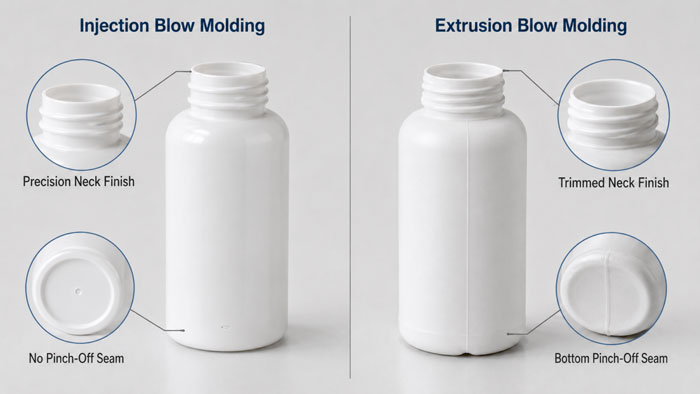
Precise neck finish is critical for caps, droppers and sprayers.
Controlled wall thickness supports consistent sealing and handling.
IBM is suitable for many small medical and healthcare packaging projects.
How IBM Ensures Leakage-Proof Packaging in the Healthcare Industry
Precision Preform Manufacturing: The Fundamental Barrier Against Leakage
Integrated One-Step Molding Process: Minimizing Leakage Risks in Production
Strict Process Control & Post-Production Testing: Ensuring Leak-Proof Reliability
Medical packaging bottles are critical carriers for storing drugs, reagents, and sterile fluids, and their leak-proof performance directly relates to drug safety and efficacy.
Injection Blow Molding (IBM) has become the mainstream technology for manufacturing high-quality medical packaging bottles due to its high precision, stability, and hygiene.
Unlike traditional molding processes, IBM integrates injection and blow molding into a single continuous operation, eliminating potential leakage risks caused by manual intervention and process disconnection.
This article explores how IBM technology ensures leak-proof medical packaging bottles by combining practical production scenarios and key process control points. :contentReference[oaicite:0]{index=0}
1. Precision Preform Molding: The Foundation of Leak-Proof Performance
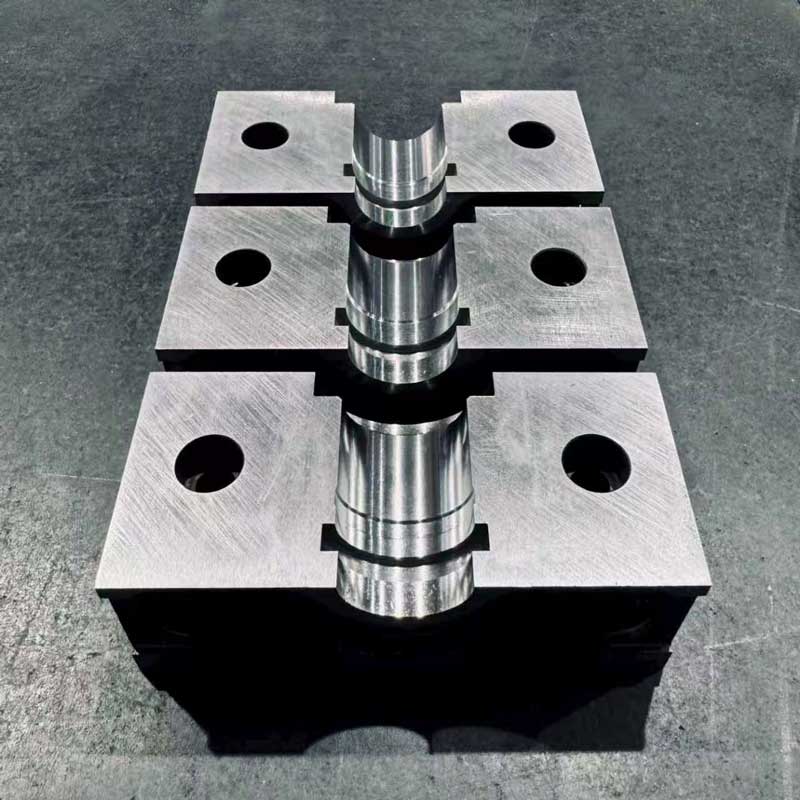
The preform is the core intermediate product in IBM, and its dimensional accuracy and structural integrity directly determine the leak-proof effect of the final bottle.
In actual production, medical bottle preforms are injection-molded in a closed mold, with the neck and thread structure fully formed in one step—this is a key advantage over extrusion blow molding, which often results in uneven bottle necks and poor sealing.
For example, in the production of 10 ml oral liquid bottles:
- Three-station one-step IBM machines are used
- Molten HDPE or PP is injected into the mold
- Neck thread, sealing groove, and bottle mouth are precisely formed
Tolerance is controlled within ±0.02 mm, ensuring tight sealing with caps or stoppers.
Material control includes:
- Medical-grade HDPE with high density
- TiO₂ masterbatch (≥98%) to prevent contamination
This ensures no internal defects such as bubbles or cracks that could cause leakage.
2. Integrated One-Step Operation: Eliminating Contamination and Leakage Risks
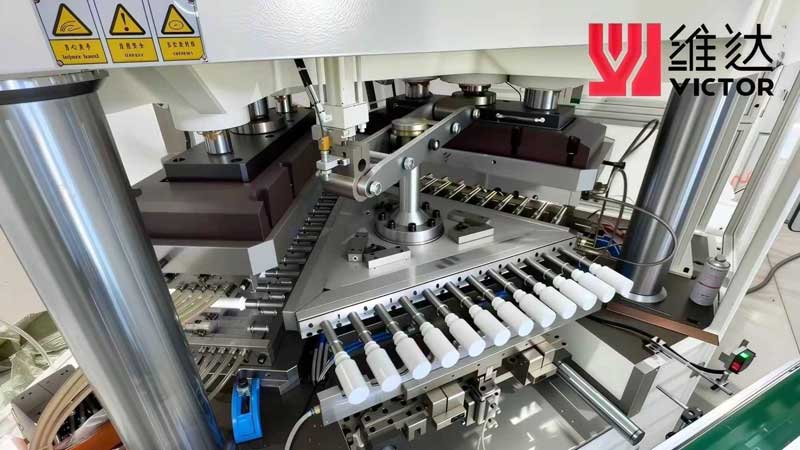
One of the biggest advantages of IBM is its integrated one-step production process:
- Injection
- Blow molding
- Demolding
All completed on the same machine without manual transfer.
In practice:
- Two-station and three-station IBM machines are used
- Three-station machines are more efficient for large-scale production
Example: sterile saline bottle production
- Station 1: preform injection
- Station 2: blow molding with compressed air
- Station 3: demolding
Key advantages:
- Fully automated production
- No human contact
- Meets GMP clean production standards
- Eliminates deformation or damage risks
Compared with two-step processes, this significantly improves leak-proof stability.
3. Strict Process Parameter Control: Ensuring Uniform Bottle Wall and Sealing
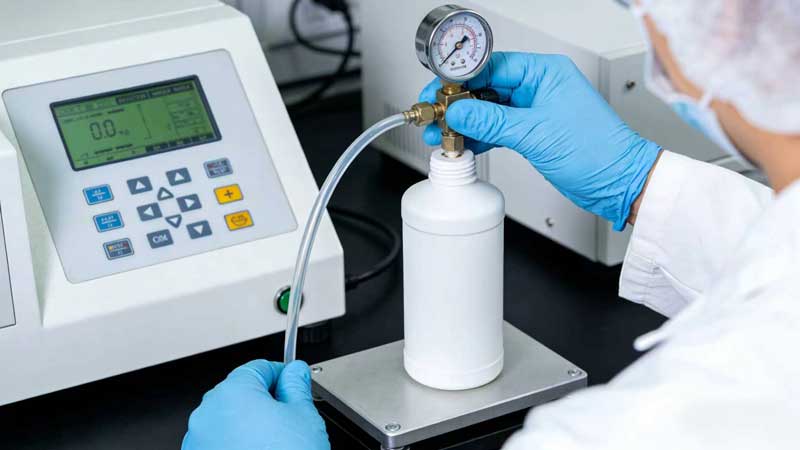
Precise control of process parameters is essential for leak-proof performance.
Key Parameters
- Melt temperature
- Injection pressure
- Blow air pressure
- Mold temperature
Example (PP Medical Bottles)
- Melt temperature: 200–220°C
- Blow pressure: 0.3–0.5 MPa
- Mold temperature: 40–60°C
If parameters are not controlled:
- Low temperature → poor flow → uneven wall
- High temperature → degradation → micro-cracks
Additional controls:
- High-precision mold manufacturing (CAD/CAM)
- Smooth mold surface finish
This ensures:
- Uniform bottle wall
- Tight sealing performance
4. Post-Production Leakage Detection: The Final Safety Check
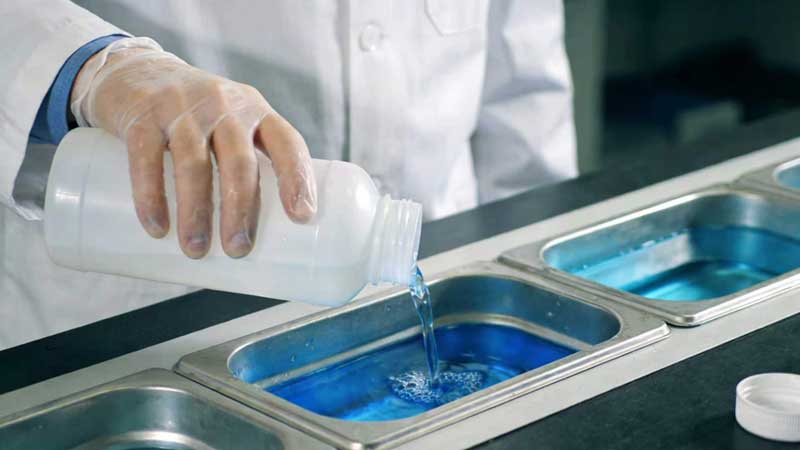
Post-production testing is essential to ensure 100% leak-proof performance.
Testing Methods
4.1 Water Immersion Testing
- Pressurize bottles (0.2–0.3 MPa)
- Submerge in water
- Bubble formation indicates leakage
4.2 Pressure Decay Testing
- Seal bottle and inject air
- Monitor pressure drop over time
- Standard: ≤0.01 MPa/min
Industrial Application
- 50 ml injection bottles
- Online detection speed: 200 bottles/min
This ensures:
- Automatic rejection of defective products
- Consistent product quality
Conclusion
Injection blow molding ensures leak-proof medical packaging through:
- Precision preform molding
- Integrated one-step production
- Strict process parameter control
- Comprehensive leakage detection
These processes ensure:
- Compliance with medical standards
- Safe drug storage and transportation
- High product reliability
As the medical industry continues to evolve, IBM technology will further optimize leak-proof performance, providing more reliable solutions for healthcare packaging.
Discuss Healthcare Packaging
Victor's engineering team can review bottle drawings, materials, capacity requirements, neck design and automation needs before you choose an IBM configuration.
Send Your Requirements