The Future of Lightweight Packaging: Why IBM Technology Becomes the Core Driver in 2025–2030
As global carbon-neutrality initiatives accelerate and environmental policies become increasingly stringent, the packaging industry is undergoing a structural transformation driven by lightweighting, recyclability, and high-performance materials.
Among all molding technologies, Injection Blow Molding (IBM) is evolving from a traditional forming method into a strategic enabler of next-generation lightweight packaging, supported by advancements in materials science, intelligent manufacturing, and cross-industry integration.
According to 2025 industry insights, IBM has surpassed its conventional roles in cosmetics, food, and pharmaceuticals—expanding into emerging markets such as medical-grade precision containers, automotive lightweight components, and new-energy barriers, reshaping competitive dynamics in the global packaging sector.
To learn about the fundamentals of IBM technology, you may refer to:
- IBM Technology Overview → https://www.victorcn.com/products/injection-blow-molding-machine/injection-blow-molding-process/
- Injection Molding (Wikipedia) → https://en.wikipedia.org/wiki/Injection_moulding
- Blow Molding (Wikipedia) → https://en.wikipedia.org/wiki/Blow_molding
I. Why Lightweight Packaging Is Entering Its Acceleration Phase (2025–2030)
Several macro factors are pushing lightweight packaging into a rapid-growth stage:
1. Global Regulatory Pressure
- EU Single-Use Plastics Directive
- Packaging tax policies in the UK, EU, and Canada
- Mandatory PCR content requirements
These policies are forcing brands to reduce plastic usage by 20–30% in the next 3–5 years.
2. Brand Sustainability KPIs
Top FMCG brands (Unilever, P&G, L'Oréal, Nestlé) have established measurable packaging KPIs:
- 100% recyclable packaging
- 30–50% material reduction
- 100% PCR usage in specific categories
3. Consumer Demand Shift
Consumers increasingly prefer:
- Lightweight & easy-to-carry packaging
- Transparent sustainability labels
- Recyclable & biodegradable materials
This creates a strong pull for more advanced, efficient packaging technologies.
II. How IBM Enables the Next Generation of Lightweight Packaging Materials
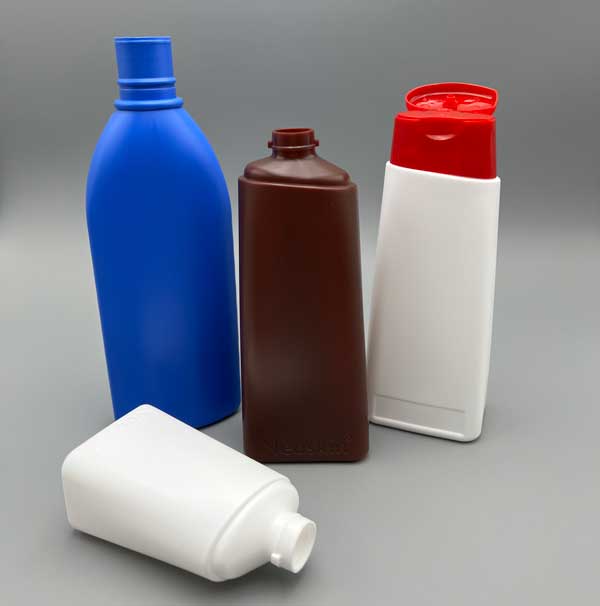
Injection Blow Molding stands out as the only mainstream technology capable of molecular-level lightweight optimization through its combined process:
- Injection
- Stretching / molecular orientation
- Blow molding
This process allows plastic molecular chains to undergo three-dimensional biaxial orientation, which dramatically improves performance while reducing material usage.
Performance Gains in 2025
Industry data shows:
- 20% reduction in material usage
- ±2% wall-thickness uniformity
- 18-second cycle time for high-speed IBM lines
- Daily outputs exceeding 120,000 PET bottles
- 15% material savings vs traditional EBM equipment
This is what experts refer to as “performance-retention lightweighting”—essential for balancing sustainability and engineering requirements.
III. Material Breakthroughs Driving IBM Lightweight Packaging
As global plastic regulations tighten—especially the EU’s biodegradable mandates—IBM has achieved breakthroughs in compatibility with eco-friendly and functional materials.
1. Recycled PET (rPET)
- Impurity removal tech enables food-grade applications
- Mechanical strength reaches 92% of virgin PET after IBM processing
2. Biodegradable Materials (PLA)
- Blow-molding temperature window increased to 220–240°C
- Reduced brittleness enables mass production of PLA bottles
3. Multi-Layer Barrier Structures
- EVOH barrier layer reduced to 0.03 mm
- Oxygen/moisture resistance preserved
- Total packaging weight reduced by 8–15%
The annual growth rate of IBM-compatible biodegradable packaging has reached 30%, showing strong market momentum.
IV. Intelligent Manufacturing: The New Productivity Engine of IBM Technology
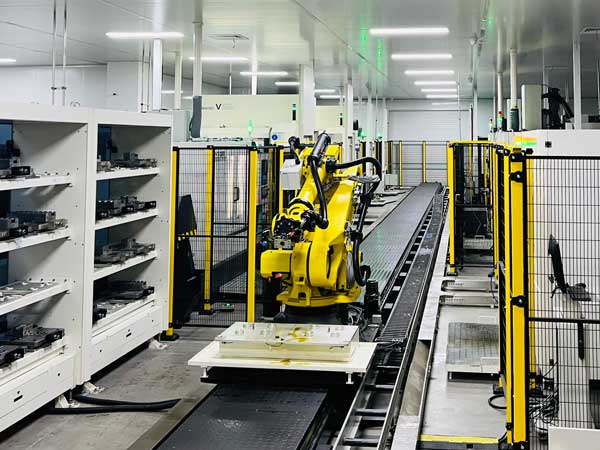
The convergence of IBM with Industry 4.0 technologies is redefining lightweight packaging efficiency.
2025 Core Technologies
- All-electric servo systems reduce energy consumption by 30–40%
- Closed-loop AI algorithms adjust wall thickness and blowing pressure in real time
- IoT-enabled smart factories track mold temperature, melt behavior, and cavity deviation
- Digital twin modeling predicts weak-point thinning before defects occur
- 3D-printed hybrid molds enable rapid customization
Cosmetics Industry Case
Gradient-foamed IBM bottles with transparent-to-frosted transitions:
- Increase consumer purchase intent by 22%
- Raise packaging cost by only 8%
V. Expanding IBM Lightweight Packaging to High-Growth Industries
IBM is no longer limited to traditional consumer packaging.
Its lightweight and high-precision advantages are accelerating adoption in five high-growth sectors.
1. Automotive Lightweighting
- PP blow-molded battery casings
- Tesla Model Y case → 40% lighter, 25% lower cost
2. Medical and Pharmaceutical Packaging
- BFS (Blow-Fill-Seal) integrates forming, filling, sealing
- Microbial contamination reduced to 0.001%
- Medical-grade IBM equipment market → 1.8 billion CNY (2026), CAGR 15%+
3. New-Energy Systems
- Multi-layer barrier IBM → oxygen transmission rate 0.01 cc/(m²·24h·atm)
- Critical for hydrogen storage, high-purity chemicals
4. Smart Packaging Integration
- RFID embedded in IBM structures
- Blockchain traceability
- Life-cycle digital tracking
5. Circular Packaging Economy
IBM supports complete recycling loops:
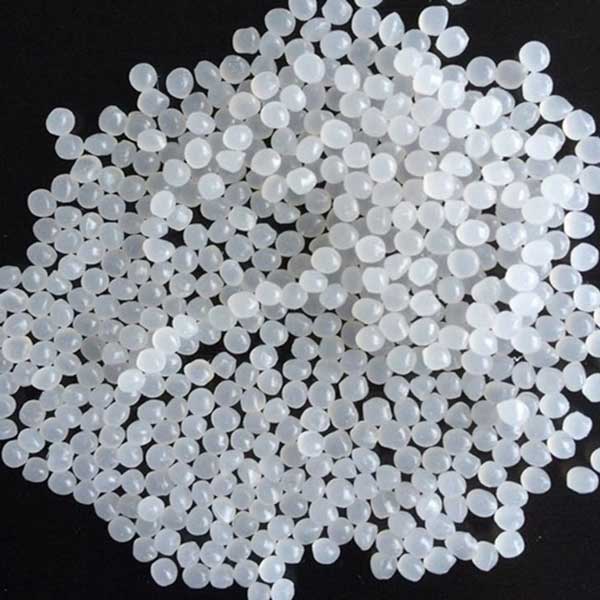
- Crushing → Washing → Pelletizing → IBM forming
- Suitable for PCR packaging systems
VI. Future Outlook: IBM’s Position in Global Lightweight Packaging (2030)
By 2030, IBM lightweight packaging will evolve along three strategic paths:
1. Circular-Economy Integration
PCR → purification → IBM → recycling → reprocessing.
2. Flexible Production Systems
Modular designs & rapid mold-change systems →
Small-batch multi-variety production increases to 60%.
3. Cross-Industry Intelligence
AI + IoT + digital twin → fully automated zero-defect factories.
The global intelligent packaging market leveraging IBM technology is forecast to exceed USD 80 billion by 2030.
For more insights on sustainable packaging, refer to:
- EPA Sustainable Packaging → https://www.epa.gov/smm/sustainable-packaging
Conclusion
Injection blow molding is no longer just a molding technology—it has become a strategic pillar in the global lightweight packaging revolution.
Driven by material innovation, intelligent manufacturing, and cross-industry expansion, IBM will continue to shape the future of sustainable packaging.
For manufacturers, embracing IBM lightweight solutions today means securing the competitive edge of tomorrow.
To learn more about IBM equipment and lightweight solutions, visit:
👉 Victor Machinery — Injection Blow Molding Machines
https://www.victorcn.com/products/injection-blow-molding-machine/
Related Articles
-
How IBM Creates Complex Packaging Shapes
https://www.victorcn.com/using-injection-blow-molding-to-create-complex-shapes-in-packaging/ -
Injection Blow Molding vs Extrusion Blow Molding
https://www.victorcn.com/injection-blow-molding-vs-extrusion-blow-molding/ -
How Three-Station IBM Machines Work
https://www.victorcn.com/how-three-station-injection-blow-molding-machines-work-process-benefits/