Injection Blow Molding vs Extrusion Blow Molding
Injection vs extrusion blow molding compared: how each works, neck accuracy, materials, waste, cost and medical packaging use, and how to choose.
The short answer
Injection blow molding (IBM) injects a preform with a finished neck and then blows it, giving precise, flash-free small bottles. Extrusion blow molding (EBM) blows an extruded parison, which suits larger containers, handles and lower tooling cost but needs trimming. Choose IBM for precision small bottles and EBM for larger or handled containers.
Comparing hydraulic and electric blow molding machines instead? Read: Hydraulic vs electric IBM machines — energy, precision and ROI
On this page
- 01What Are the Differences Between Injection Blow Molding and Extrusion Blow Molding?
- 02IBM vs EBM: Which Blow Molding or Blow Moulding Process Should You Choose?
- 03Quick Comparison: IBM vs EBM Process Differences
- 04How Do IBM and EBM Machines Work?
- 05Common Bottle Applications for IBM and EBM
- 06Raw Materials Used in IBM vs EBM
- 07Cost Difference: Equipment Price Is Not the Whole Story
- 08IBM vs EBM for medical and pharmaceutical packaging
- 09Image Links for Faster Machine and Application Research
- 10Useful External References for Process Validation
- 11Still Unsure Which Process Fits Your Bottle Design?
- 12Frequently asked questions
IBM vs EBM process guide
When setting up a plastic bottle manufacturing line, selecting the ideal process is critical for cost efficiency and product quality. This practical guide compares injection blow molding vs extrusion blow molding for B2B buyers, also covering the common UK spelling injection blow moulding vs extrusion blow moulding, IBM vs EBM process flow, tolerances, waste, tooling cost and bottle applications.
View IBM Machine Range
Ask Victor to Review Your Bottle
Injection blow molding is usually selected for precision small bottles; extrusion blow molding is usually selected for larger hollow containers. Buyers using British terminology may compare the same processes as injection blow moulding and extrusion blow moulding.
Best for IBM
Precision small bottles
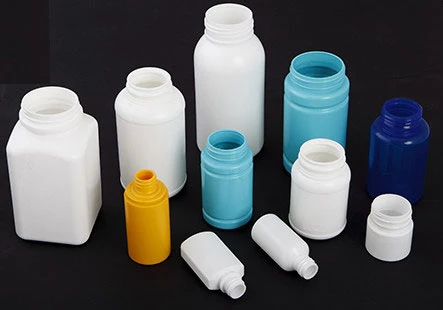
Pharmaceutical, medical, cosmetic and high-value packaging where neck accuracy and clean production matter.
Best for EBM
Large hollow containers
Jerry cans, drums, tanks and large bottles where shape flexibility and lower initial tooling cost are priorities.
Main tradeoff
Precision vs flexibility
IBM reduces flash waste and improves neck finish accuracy. EBM handles larger parts with simpler equipment.
Process fundamentals
What Are the Differences Between Injection Blow Molding and Extrusion Blow Molding?
Both processes create hollow plastic containers, but they form the starting shape in completely different ways. Injection blow molding starts from an injection molded preform. Extrusion blow molding starts from an extruded parison. In British English, the same buyer comparison is often written as injection blow moulding vs extrusion blow moulding.
This difference affects neck precision, wall thickness control, trimming waste, mold structure, material behavior, cycle stability and the type of bottle each process can produce efficiently.
Injection Blow Molding (IBM)
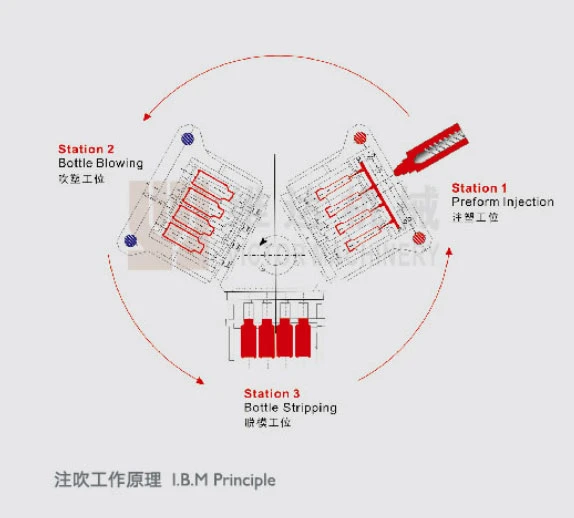
- Injection: molten plastic is injected around a core rod to form a precise preform and neck finish.
- Blowing: the preform moves to the blow station and is inflated inside the bottle mold.
- Stripping: the finished bottle is removed without trimming flash.
Extrusion Blow Molding (EBM)
- Extrusion: molten plastic is extruded downward as a hollow tube called a parison.
- Clamping: the mold closes around the parison and pinches off excess material.
- Blowing and trimming: air forms the bottle, then flash must be trimmed after cooling.
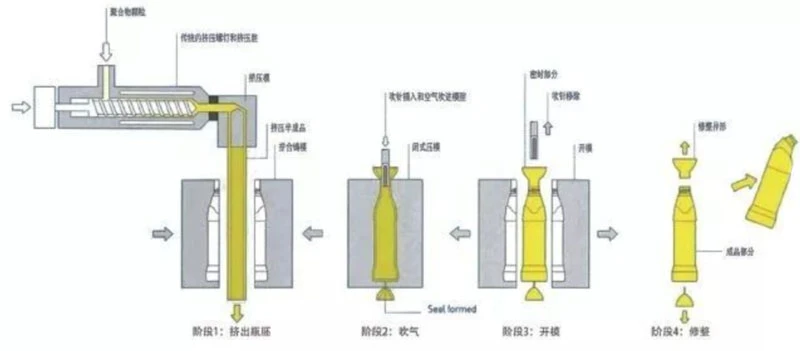
Buyer decision summary
IBM vs EBM: Which Blow Molding or Blow Moulding Process Should You Choose?
Choose injection blow molding when you need
- Small or medium precision bottles with accurate threaded necks
- Pharmaceutical, medical, cosmetic, laboratory or high-value packaging
- Low flash waste and cleaner production without secondary trimming
- Stable dimensions, repeatable wall thickness and reliable sealing
Choose extrusion blow molding when you need
- Large bottles, jerry cans, drums, tanks or irregular hollow parts
- Lower tooling cost for less precision-critical packaging
- Large container flexibility and wider product geometry options
- Applications where trimming flash is acceptable in the process
Side-by-side comparison
Quick Comparison: IBM vs EBM Process Differences
| Feature / Factor | Injection Blow Molding (IBM) | Extrusion Blow Molding (EBM) |
|---|---|---|
| Starting form | Injection molded preform | Extruded parison |
| Neck precision | Extremely high; the neck is pre-molded by injection | Standard; depends on mold closing, trimming and neck calibration |
| Scrap / waste material | Zero flash and very low process waste | Generates flash that requires trimming and recycling |
| Best container size | Small to medium precision bottles | Medium to large hollow containers |
| Initial mold cost | Higher upfront investment for precision tooling and core rods | Lower initial mold costs for many large hollow containers |
| Best applications | Pharmaceutical pill bottles, eye droppers, cosmetics, lab containers | Large milk jugs, detergent drums, jerry cans, complex handles |
| Quality priority | Dimensional consistency, clean production and sealing reliability | Size flexibility, output and container-volume economics |
Equipment structure
How Do IBM and EBM Machines Work?
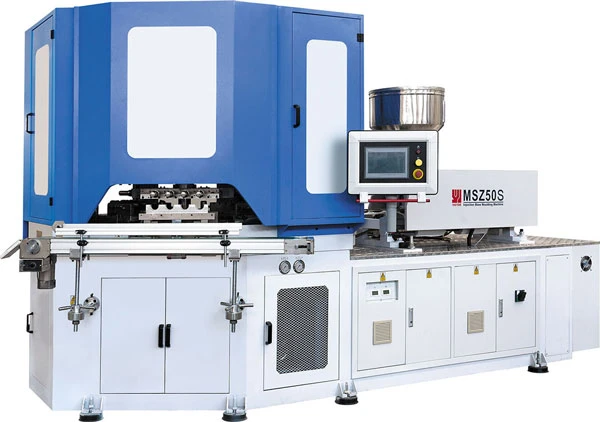
An injection blow molding machine integrates injection, blowing and stripping stations. This structure is designed for precise preform formation and repeatable bottle production. An extrusion blow molding machine uses an extruder, die head, clamping unit and trimming system to produce larger hollow containers from a parison. For the IBM process in more detail, see our three-station injection blow molding machine guide.

Waste
IBM avoids parison flash; EBM normally requires trimming.
Neck precision
IBM forms the neck by injection, improving thread accuracy.
Container size
IBM fits precision small bottles; EBM fits larger hollow containers.
Project risk
Pharma and medical projects often value repeatability over lowest initial cost.
Applications
Common Bottle Applications for IBM and EBM
| Application | Better fit | Why it matters |
|---|---|---|
| Pharmaceutical pill bottles | Injection blow molding | Precise neck finish, clean production and stable sealing are usually more important than low tooling cost. See the pill bottle manufacturing guide. For medical and pharmaceutical packaging specifically, read the dedicated medical packaging process comparison. |
| Eye dropper and nasal spray bottles | Injection blow molding | Small dosage packaging requires accurate neck geometry and consistent dimensions. Review pharmaceutical eye dropper solutions. |
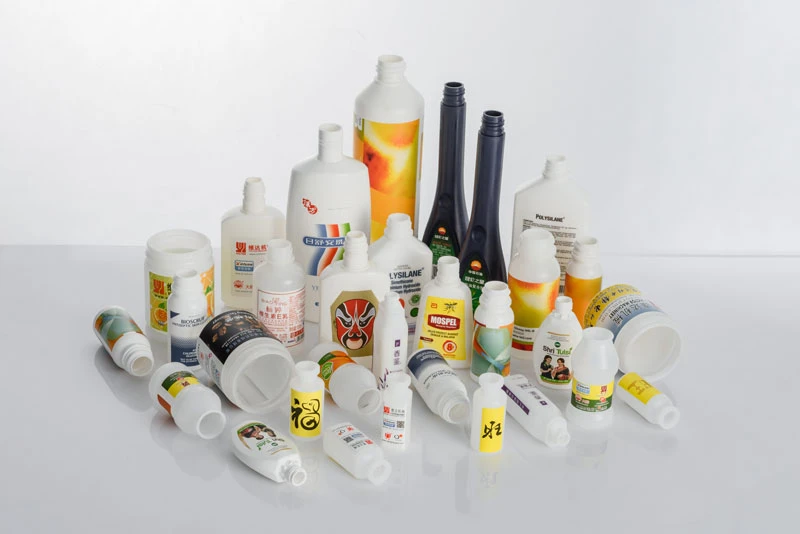
| Cosmetic jars and small daily chemical bottles | Injection blow molding | Surface finish, dimensional control and reduced trimming waste improve product quality. Explore cosmetic bottle machine applications. |
| Jerry cans, drums and large containers | Extrusion blow molding | Large volume and flexible hollow shapes are usually better matched with EBM equipment. |
| Large industrial hollow parts | Extrusion blow molding | EBM can handle larger parisons and wider product shapes, even though trimming is required. |
Material selection
Raw Materials Used in IBM vs EBM
Both processes can work with common packaging plastics, but material choice should always be validated against bottle geometry, sealing requirements, regulatory needs and production stability.

HDPE and PP are common in precision IBM packaging. EBM is widely used for HDPE, LDPE and larger industrial containers.
Cost and quality
Cost Difference: Equipment Price Is Not the Whole Story
EBM equipment can be simpler and lower cost for large containers, but the total production cost also includes resin loss, flash trimming, labor, reject rate, sealing reliability and secondary handling.
For precision small bottles, IBM may reduce downstream waste and quality risk even if the machine and mold investment is higher. For large industrial containers, EBM may still be the more economical process.
Visual navigation
IBM vs EBM for medical and pharmaceutical packaging
Medical packaging such as pharmaceutical bottles, diagnostic reagent bottles, sample containers and injectable drug containers is where the differences between the two processes matter most. These containers are usually small, must seal reliably with screw caps, stoppers, septa or tamper-evident closures, and are produced under GMP, often in cleanrooms.
Neck precision and sealing
In EBM the neck is formed when the parison is clamped and blown, which can leave variation in neck diameter, threads and the sealing surface. IBM injection molds the neck and threads in precision steel tooling under pressure, so the sealing surface, threads and closure fit are far more consistent. Small deviations at the neck can cause leakage, contamination, moisture ingress and reduced drug stability.
Sterility and contamination control
An EBM parison is exposed to the surrounding air before molding, and trimming the flash adds handling and particles. IBM runs from preform to finished bottle in one closed, automated cycle with no trimming in most cases, which means less airborne contamination, less human contact and easier cleanroom integration.
Medical-grade materials
EBM medical containers are mostly LDPE and HDPE. IBM processes a wider range of medical-grade resins, including PE, PP, PET and cyclic olefins (COC/COP), which offer chemical and sterilization resistance, clarity and low extractables for high-value packaging.
Validation and regulatory compliance
Regulators such as the FDA and EMA expect repeatable processes, documented parameters and material traceability. Because IBM is automated and its temperature, pressure and cycle time can be tightly controlled, it is easier to validate and document than a process with more dimensional variation and trimming.
| Medical packaging requirement | Injection blow molding (IBM) | Extrusion blow molding (EBM) |
|---|---|---|
| Neck and thread precision | Excellent | Moderate to lower |
| Wall thickness uniformity | Excellent | Less consistent |
| Sterility control | Closed, automated cycle | Parison exposed; trimming required |
| Waste and post-processing | Very low; minimal finishing | Trim scrap; secondary finishing |
| Medical-grade materials | PE, PP, PET, COC/COP | Mainly LDPE and HDPE |
| Typical medical uses | Pharma bottles, vials, diagnostic and sample containers | Larger or less critical containers |
For most small medical containers IBM is the better choice. EBM remains useful for larger containers, handled bottles and lower-cost packaging for non-critical products. See also how pill bottles are manufactured and injection blow molding in medical device manufacturing.
Image Links for Faster Machine and Application Research
IBM Machine Range
Compare Victor hydraulic, hybrid and all-electric IBM systems.
Watch the IBM machine and process in a practical video page.
Injection Blow Molds
Plan tooling, core rods, cavity count and mold service life.
External references
Useful External References for Process Validation
These non-competing references help buyers verify terminology, process fundamentals and structured data context while keeping the commercial decision path on Victor's own application and machine pages.
British Plastics Federation: Extrusion Blow Moulding
Authoritative process explanation for EBM equipment, parison formation and hollow container production.
Industry body reference for plastics processors, equipment manufacturers and moldmakers.
Reference for video markup used across Victor's machine video pages and SEO enhancements.
Engineering support
Still Unsure Which Process Fits Your Bottle Design?
Our engineering team provides tailored turnkey consultations, mold designs, and equipment matching based on your bottle drawing, resin, capacity, neck finish, cap type and target output.
Browse Victor injection blow molding machines for precision bottle mass production.
Related Reading for Blow Molding Machine Selection
Injection Blow Molding Machine
Review Victor IBM machines for precision bottle production.
Injection Blow Molding Process
Understand the process flow from preform injection to bottle stripping.
Three-Station IBM Machine
Learn how injection, blowing and stripping stations work together.
See why IBM is commonly selected for pharmaceutical pill bottles.
Compare IBM and EBM for small HDPE, PP, LDPE and PS bottles.
Injection Blow Molds
Plan tooling, cavity count and mold service life for IBM projects.
Explore suitable bottle shapes and applications for injection blow molding.
Review HDPE, PP, LDPE and PS material choices for precision bottle projects.
Connect the process choice to pharmaceutical and small dosage packaging.
MSZ30 IBM Video
Watch Victor's injection blow molding machine in a dedicated video page.
FAQ
Frequently asked questions
What is the main difference between injection blow molding and extrusion blow molding?
Injection blow molding (IBM) forms the bottle neck with a separate injection step for high precision and zero flash, while extrusion blow molding (EBM) extrudes a parison and pinches it in the mold, which is faster to tool up but requires post-trimming and generates scrap. IBM suits small, high-precision containers; EBM suits larger or handled containers at lower initial mold cost.
Is EBM cheaper than IBM?
EBM machinery and tooling generally require a lower initial upfront investment compared to IBM. However, for massive production of small precision containers, IBM can lower the long-term cost per unit due to its zero-waste process, rapid cycle times and stable bottle accuracy.
Where should I compare medical or pharmaceutical bottle projects?
This page gives the general IBM vs EBM buying framework. For medical and pharmaceutical packaging specifically, use our dedicated medical packaging comparison guide so that the application-specific decision is handled on the right page.
Why does extrusion blow molding create more flash waste?
EBM starts from an extruded parison. When the mold closes, excess material is pinched at the parting line, neck or base and must be trimmed after molding.
Can Victor help choose between IBM and EBM?
Yes. Victor can review bottle drawings, capacity, resin, neck finish, output target and application requirements to recommend whether injection blow molding is suitable for the project.
Plan your bottle project
Get a machine and mold recommendation for your bottle
Share your bottle drawing or sample, resin and target output. Victor's engineers will recommend a suitable MSZ model, cavity layout and mold concept.
Request a technical proposal- Bottle drawing, sample or photo
- Material: HDPE, PP, PS, PETG or other resin
- Target output and neck finish
- Destination country for delivery