SolutionsPharmaceutical & medical
Hand Sanitizer Bottle Making Machine
Victor provides injection blow molding machines and mold solutions for manufacturers of HDPE and PP bottles used for hand sanitizer, alcohol spray and other disinfectant products.
Hand sanitizer and disinfectant bottle solutions
Hand sanitizer and disinfectant products are part of everyday life in homes, offices, hotels, schools, healthcare facilities and public spaces. Their packaging needs to be convenient to use, easy to carry and suitable for the product inside. A well-designed bottle must also work reliably with its pump, spray head or cap.
We work with customers to match the bottle shape, neck finish and mold design to their product requirements and selected closure.
Whether you are developing a compact bottle for portable use, a spray bottle for surface disinfectant or a pump bottle for liquid hand sanitizer, the bottle design should be considered as part of a complete packaging system. Volume, material, bottle weight, closure and filling requirements all influence the final machine and mold configuration.
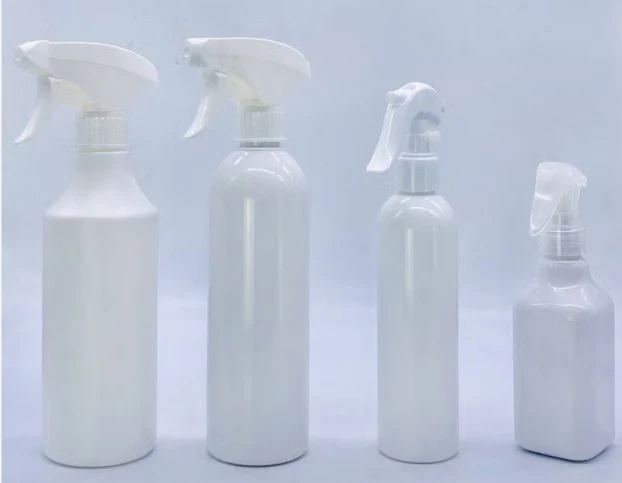
Which machine makes hand sanitizer bottles?
An injection blow molding machine can produce HDPE and PP bottles for hand sanitizer and disinfectant products. The right configuration depends on the bottle’s dimensions, weight, shape, neck finish and required output.
Injection blow molding is a suitable option for bottles where the neck and closure fit are important. The neck finish can be designed around the selected pump, spray head, flip-top cap or threaded closure. This helps manufacturers develop packaging that meets their product and filling requirements.
When evaluating a machine for a new bottle project, consider:
- Bottle volume and overall dimensions
- HDPE or PP material
- Bottle weight and wall thickness
- Neck finish and closure type
- Required mold cavity number
- Target production output
- Filling, capping and inspection requirements
Victor can review a bottle drawing, finished sample or closure specification to help determine a suitable machine and mold configuration. For a new project, sharing the intended bottle and cap together can help align the bottle design with the packaging requirements from the start.
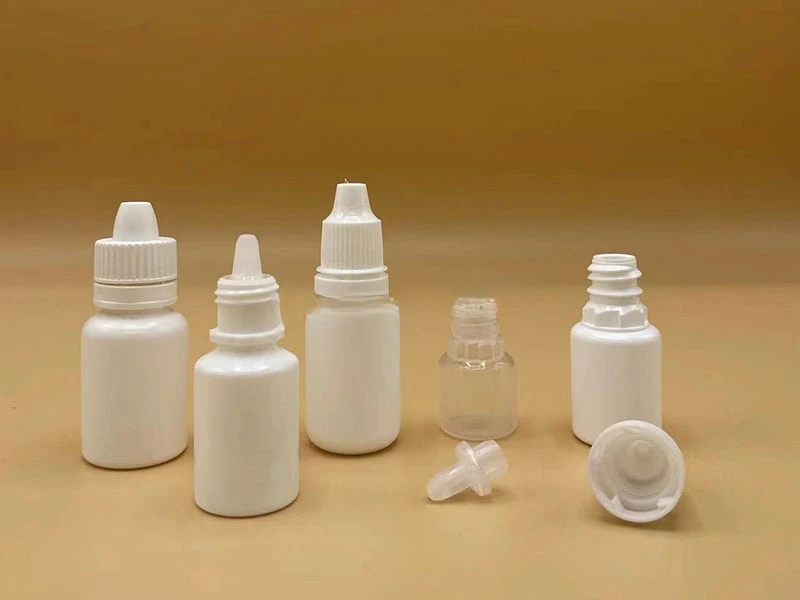
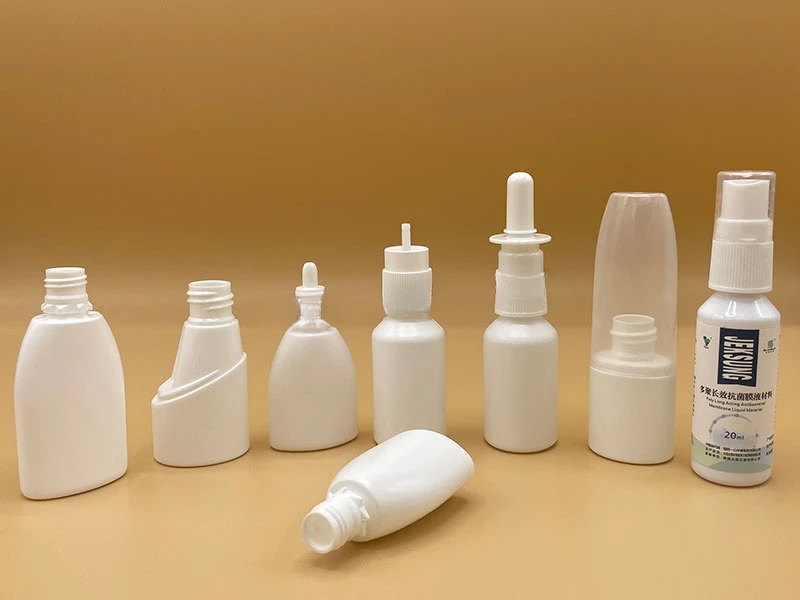
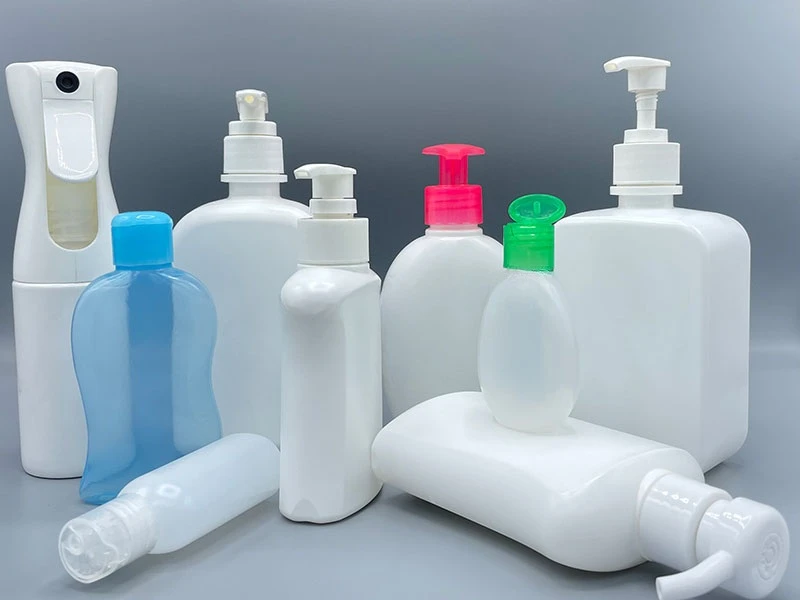
Bottle types: pump, spray and flip-top
Sanitizer and disinfectant products use several types of packaging. Each closure has different requirements for the bottle neck and sealing surface.
Pump bottles for hand sanitizer
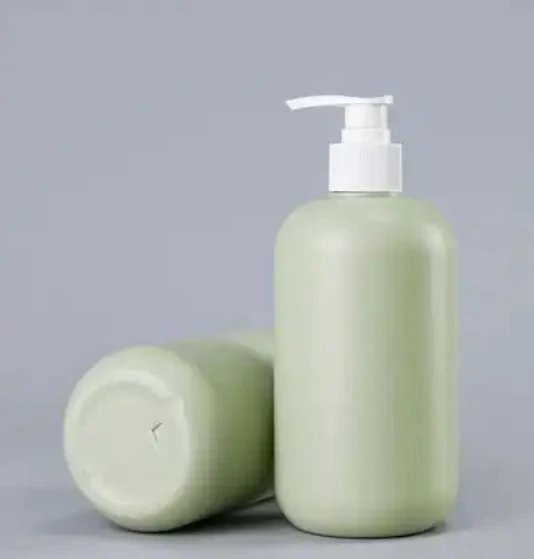
Pump bottles are commonly used for liquid hand sanitizer, hand-washing products and gel disinfectants. They allow users to dispense a measured amount of product and are suitable for household, workplace and public-use packaging.
A pump bottle should be designed to support the pump securely and remain comfortable to use. Important considerations include:
- Neck dimensions and thread compatibility
- A consistent sealing surface
- Secure pump installation
- Bottle rigidity during repeated dispensing
- A body shape that is easy to hold and label
The pump, bottle neck and any liner or gasket should be checked together. Their compatibility can affect both dispensing and sealing performance.
Spray bottles for alcohol and disinfectant
Alcohol spray bottles and surface disinfectant bottles typically use a threaded spray head. For reliable use, the spray head should fit the bottle neck correctly and remain secure during handling, storage and transport.
Bottle design considerations include:
- Thread dimensions that match the spray head
- A stable neck shape
- A suitable sealing surface
- Appropriate bottle weight and wall thickness
- Compatibility with the product and filling conditions
The spray head and bottle should be evaluated as a package. If the product includes a dip tube or liner, these components should also be included in the compatibility review.
Flip-top bottles for portable products
Flip-top bottles are often selected for small, portable sanitizer and disinfectant products. They provide convenient access and can be designed for a range of bottle shapes and sizes.
For a flip-top package, the design should consider:
- Fit between the cap and bottle neck
- Closure engagement and ease of opening
- A consistent contact surface for sealing
- Performance after repeated opening and closing
- The possibility of leakage when the package is stored or transported
The bottle and cap should be tested together under conditions that reflect how the product will be filled, stored and used.
Alcohol cotton and pad containers
Containers for alcohol cotton, alcohol pads or similar products need to provide convenient access while helping protect the contents between uses. Depending on the product format, these containers may use a flip-top, threaded cap or another dispensing closure.
The container design should account for the product dimensions, opening size, closure style and expected use. Victor can review the packaging requirements and develop a mold configuration for the selected bottle or container design.
Recommended machines and mold cavities
The machine and mold configuration should be selected for the specific bottle – not just its nominal capacity. Bottle weight, dimensions, material, neck finish and target output all affect the recommendation.
| Application | Material | Typical closure | Configuration |
|---|---|---|---|
| Portable hand sanitizer bottle | HDPE / PP | Flip-top or threaded cap | Selected according to bottle design and required output |
| Liquid hand sanitizer bottle | HDPE / PP | Pump | Selected to match the bottle neck, weight and production needs |
| Alcohol spray bottle | HDPE / PP | Spray head | Selected according to bottle dimensions and closure specification |
| Disinfectant bottle | HDPE / PP | Pump, spray head or cap | Selected according to product and packaging requirements |
| Alcohol cotton or pad container | HDPE / PP | Flip-top or threaded cap | Selected according to the container opening and product format |
Mold cavity number and expected output should be confirmed for each bottle design. Factors include:
- Bottle size and weight
- Material and wall thickness
- Neck and closure geometry
- Mold layout
- Required production conditions
- Downstream handling requirements
Victor can assess the application using a bottle drawing, sample or design specifications. Once the bottle and closure requirements are clear, the machine and mold configuration can be discussed in more detail.
Sealing for volatile liquids
Alcohol-based sanitizers and other volatile liquids require careful attention to package sealing. Sealing performance depends on the entire package system, not on the bottle body alone. The bottle neck, cap, liner, pump or spray head, filling method and closing conditions may all contribute.
Match the bottle neck to the closure
A pump, spray head and flip-top cap each require a suitable neck design. The thread, neck dimensions and sealing surface should be designed around the selected closure. Using a closure sample or technical drawing during bottle and mold development can help identify fit requirements early.
Consider the complete package
Where applicable, review the compatibility of:
- The bottle neck and closure
- The thread or snap-fit structure
- The sealing surface
- Any liner, gasket or seal
- The pump or spray assembly
- The filling and capping process
Material selection should also be checked against the alcohol concentration, product formulation, storage temperature and expected shelf life. HDPE or PP may be suitable for different applications, but the final choice should be validated with the actual product and packaging conditions.
Validate sealing performance
The finished bottle and closure should be tested as a complete package. Depending on the product requirements, evaluation may include leakage testing, inverted storage testing, closure checks and longer-term storage assessment.
Testing with the intended liquid, closure and filling conditions helps establish whether the package meets the customer’s requirements. Sealing performance should not be assumed from the bottle design alone.
Bottle and mold development
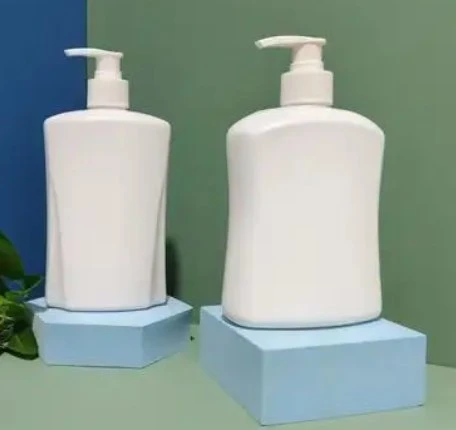
Bottle development starts with understanding how the package will be used. A design for a pump bottle may have different requirements from a compact spray bottle or a flip-top container.
Victor can review project information such as:
- Bottle drawing or sample
- Required capacity and dimensions
- HDPE or PP material
- Bottle weight or wall-thickness targets
- Pump, spray head or cap sample
- Required mold cavity number
- Production output expectations
- Filling, capping and labeling needs
The neck finish is an important part of this review. It must correspond to the selected closure and provide a suitable sealing interface. The bottle body should also suit the product’s handling, storage and labeling requirements.
For new packaging projects, it is helpful to provide both the bottle reference and the closure information. This gives the machine and mold design teams a clearer basis for discussing the proposed configuration.
A practical approach to your bottle project
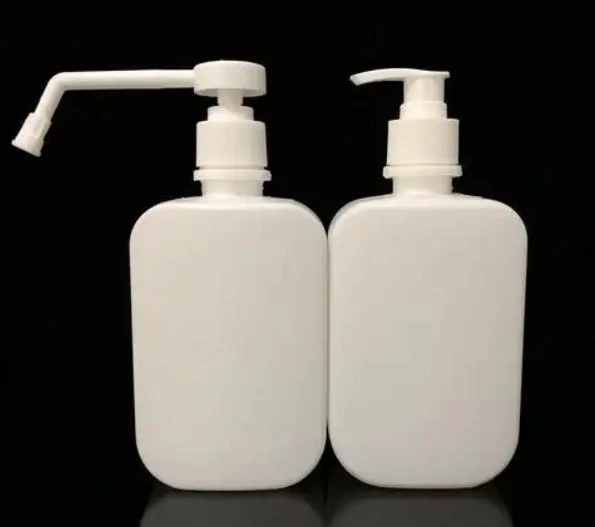
Every hand sanitizer and disinfectant bottle project has its own requirements. A portable alcohol spray bottle, a pump bottle for liquid sanitizer and a flip-top container may use different bottle shapes, neck finishes and mold designs.
To begin a project with Victor, prepare the following information where available:
- Bottle drawing or finished sample
- Required bottle capacity and dimensions
- Intended material: HDPE or PP
- Pump, spray head, flip-top cap or other closure details
- Product type and relevant filling conditions
- Required production output
- Labeling and downstream packaging requirements
With this information, Victor can discuss the appropriate injection blow molding machine and mold solution for your bottle application.
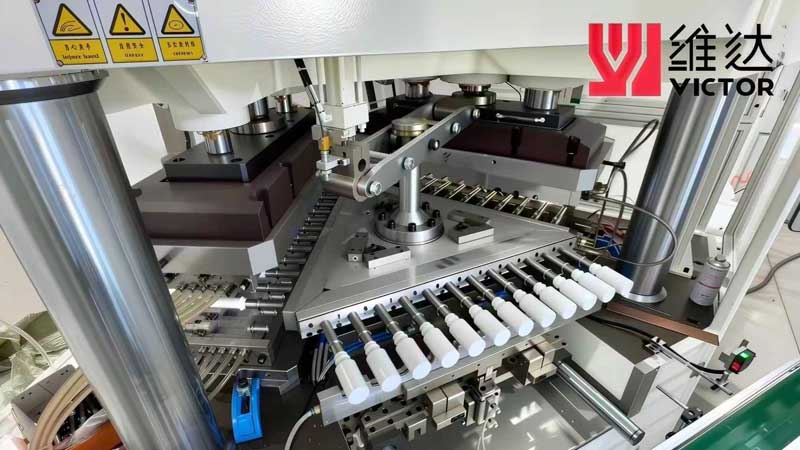
Three-station injection blow molding
One machine, three stations, a finished bottle
- Station 1 · 0°
Injection
The preform is injection molded on a core rod – the neck and thread of the hand sanitizer bottles are finished here and never change again.
- Station 2 · 120°
Blowing
The table turns 120° and air through the core rod blows the warm preform into the bottle mold. No parison, no pinch-off, no flash.
- Station 3 · 240°
Stripping
Another 120° and the finished bottle is stripped off the rod, ready to pack – no trimming and no scrap, with all three stations working at once.
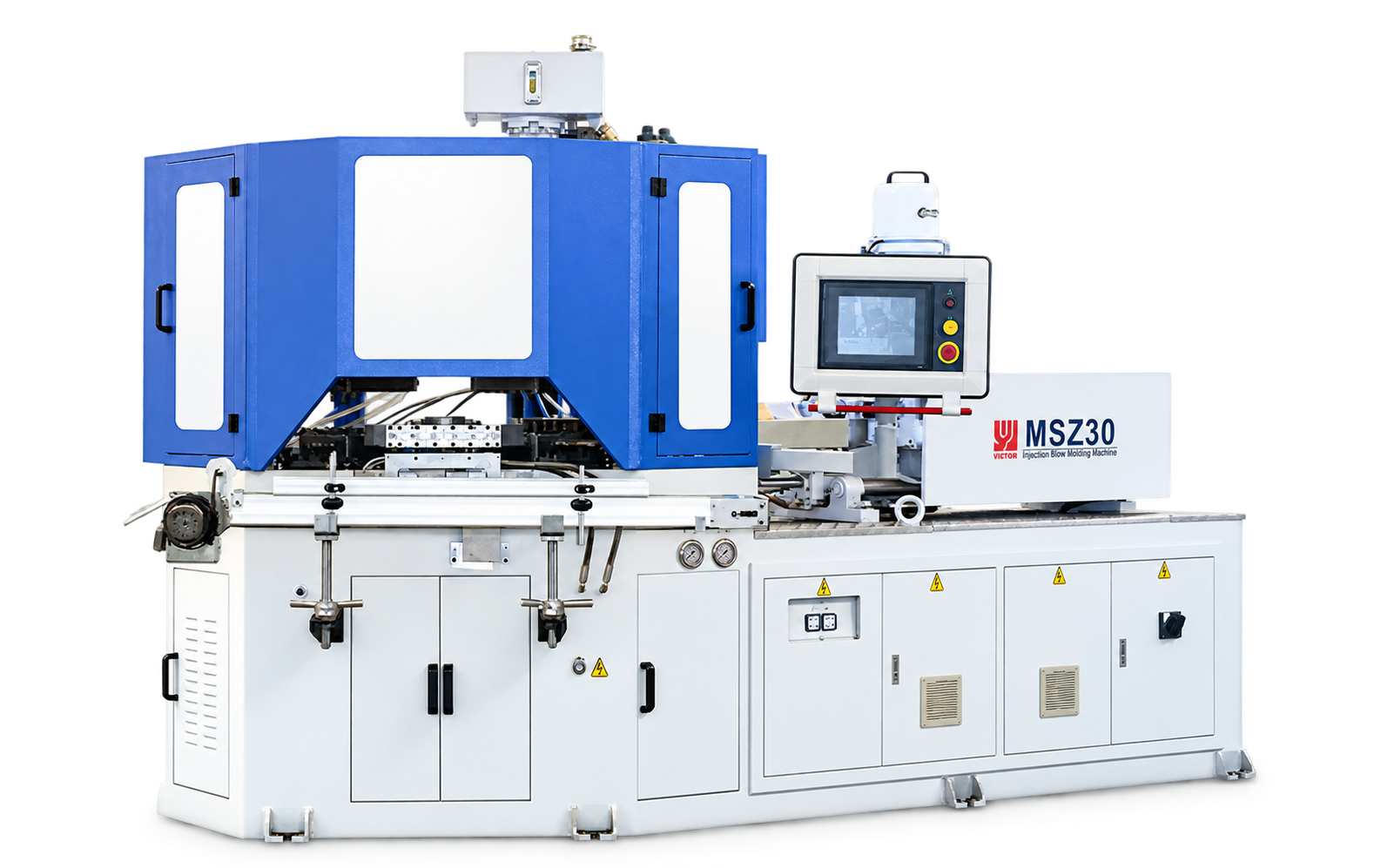
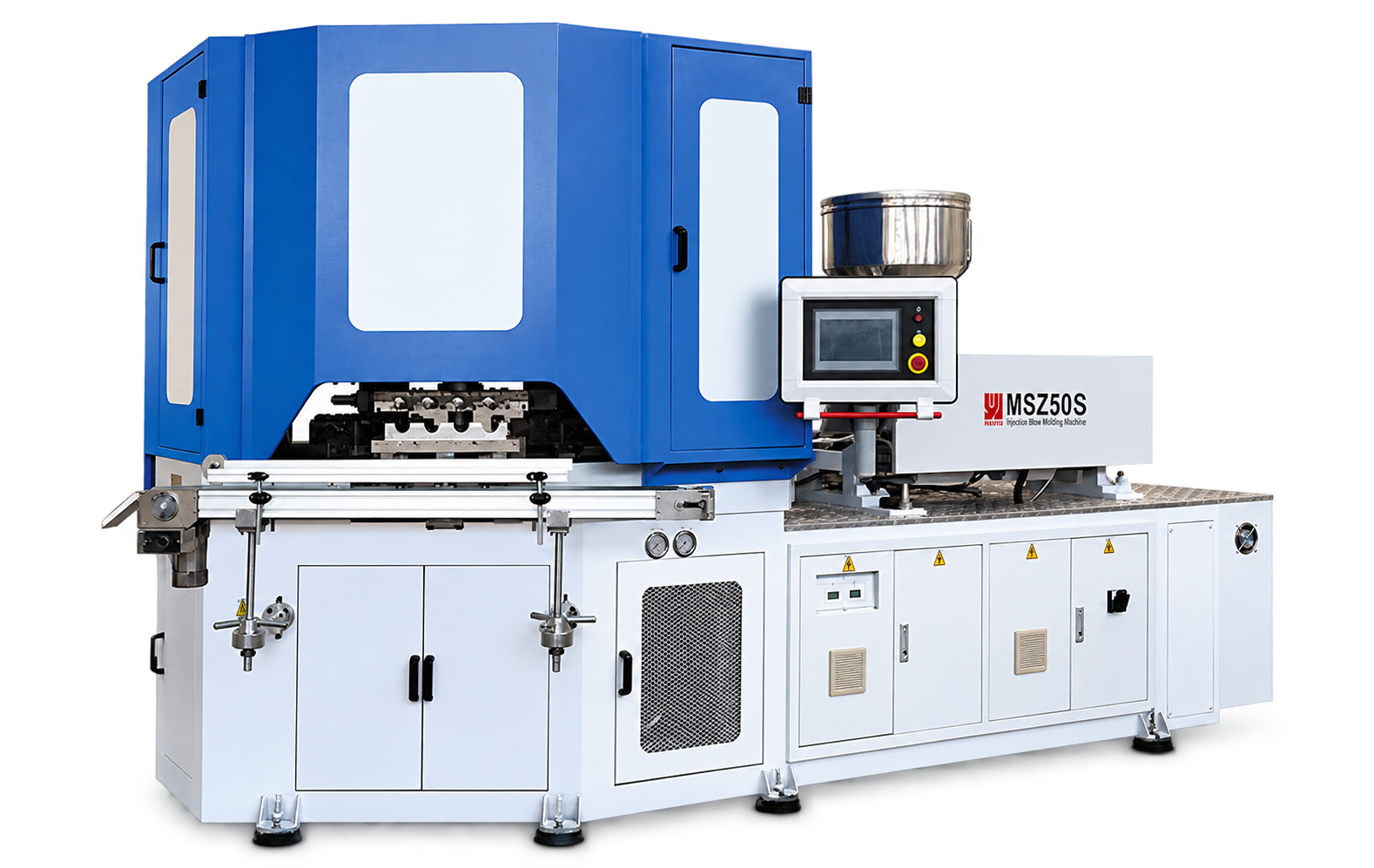
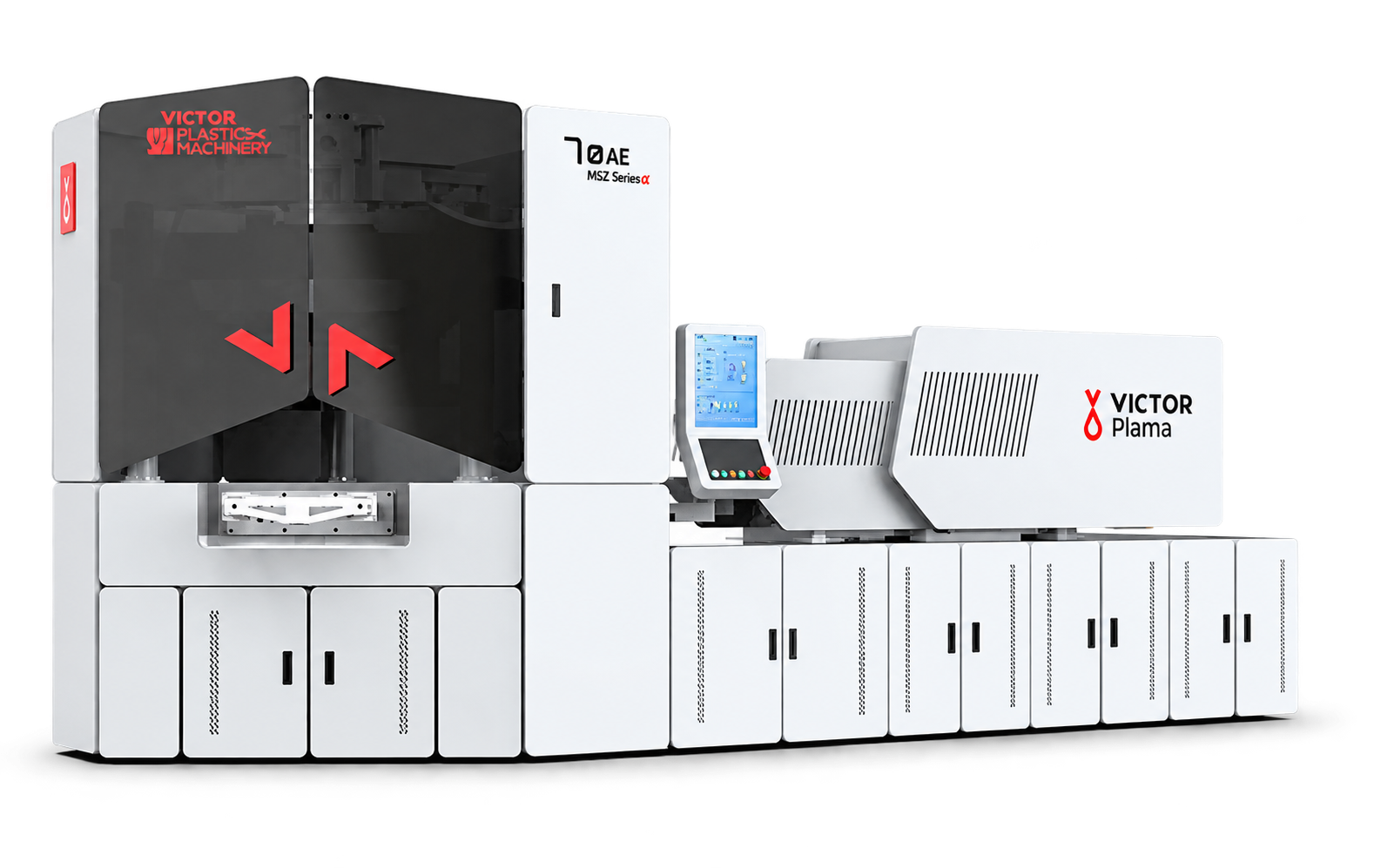
Suggested machines
Typical machines for pharmaceutical & medical
A starting point – the right model depends on your bottle volume, shot weight and cavity count.
Hand sanitizer bottles: FAQ
What machine is used to make hand sanitizer bottles?
An injection blow molding machine can produce HDPE and PP bottles for hand sanitizer and disinfectant products. The suitable machine and mold configuration depend on the bottle design, neck finish, material and required output.
Can the machine make pump, spray and flip-top bottles?
Bottle molds can be designed for different closure types, including pumps, spray heads and flip-top caps. The bottle neck should be developed to match the selected closure.
What materials can be used for hand sanitizer bottles?
Victor’s bottle-making solutions are for HDPE and PP applications. Material selection should be checked against the product formulation, alcohol concentration, storage conditions and expected shelf life.
Can the machine make alcohol spray bottles?
The machine can be configured to produce HDPE or PP bottles for alcohol spray products. The bottle neck, spray head and any sealing components should be reviewed together.
How can leakage be reduced?
Leakage can be addressed by matching the bottle neck and closure, checking the sealing surface and validating the complete package under the intended filling and storage conditions. The bottle, cap, pump or spray head should be tested together.
How many bottles can the machine produce per hour?
Output depends on the bottle design, material, bottle weight, mold cavity number and production conditions. Victor can discuss expected output after reviewing the project specifications.
Can one machine produce different bottle designs?
The ability to produce different designs depends on the machine specifications and mold compatibility. Each bottle design should be reviewed to confirm the applicable mold and production configuration.
Can Victor help with a custom bottle mold?
Victor can discuss a mold solution based on the bottle drawing, finished sample, material and closure requirements. Providing the pump, spray head or cap information helps clarify the neck design needed for the project.
Contact Victor about your hand sanitizer bottle project
Planning a new hand sanitizer, alcohol spray or disinfectant bottle? Send Victor your bottle drawing or sample, together with the closure details and production requirements. We can discuss an injection blow molding machine and mold configuration for your HDPE or PP bottle project.