SolutionsPharmaceutical & medical
Syrup Bottle Making Machine
PP dry syrup bottles, 30–500 ml, engineered around your output.
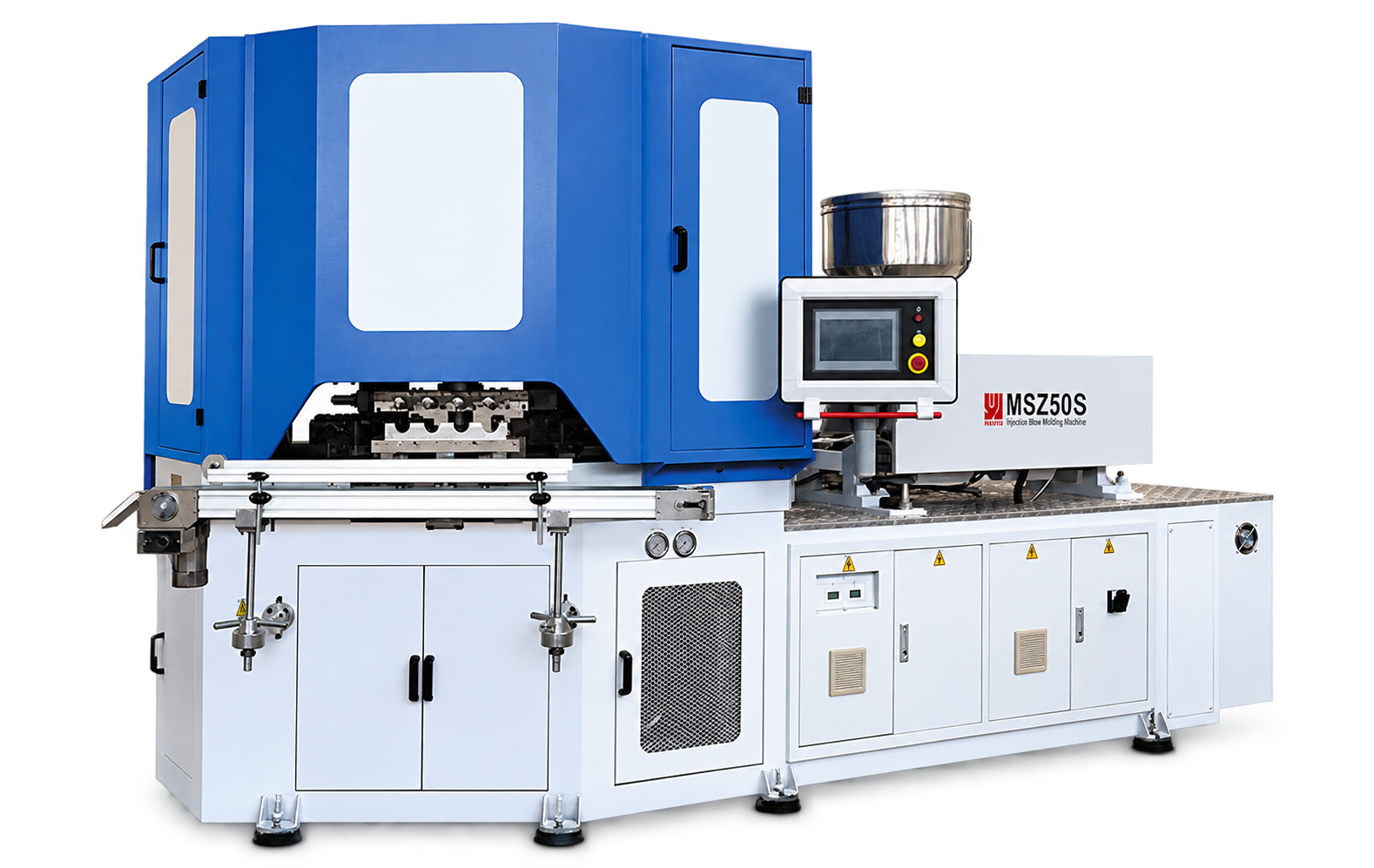
PP dry syrup bottles are made for powder or granules that are reconstituted with water – not for ready-to-drink syrup. Victor selects the injection blow molding (IBM) machine for a 30–500 ml bottle according to the neck design, bottle dimensions, light protection, your closure and your target output. For a typical 100 ml syrup bottle, the MSZ50S runs an 8-cavity mold on a 14-second cycle, achieving about 2,060 bottles per hour, while also handling both small and large bottle formats.
Which machine makes syrup bottles?
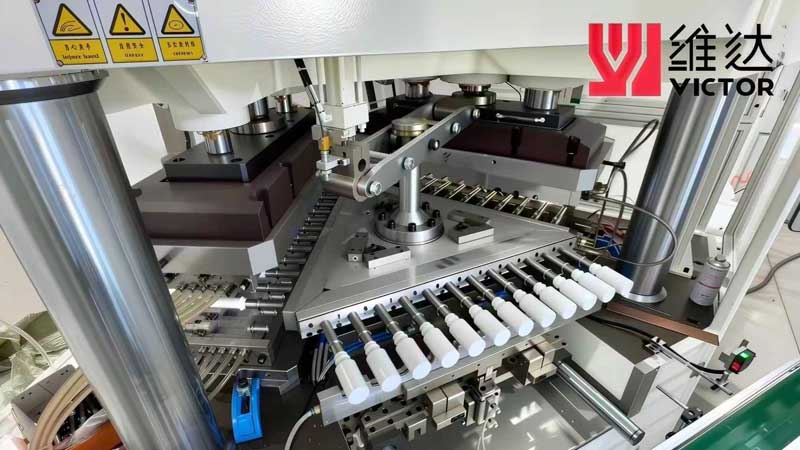
Syrup bottles are made on injection blow molding machines. The process injection-molds a precise PP parison, then blows it into the bottle shape in a second cavity. Because the neck finish is formed in the injection mold, the thread, sealing land and tamper-evident bead stay dimensionally stable – important when the bottle has to mate with a measuring-cup closure.
At Victor, the usual starting points are:
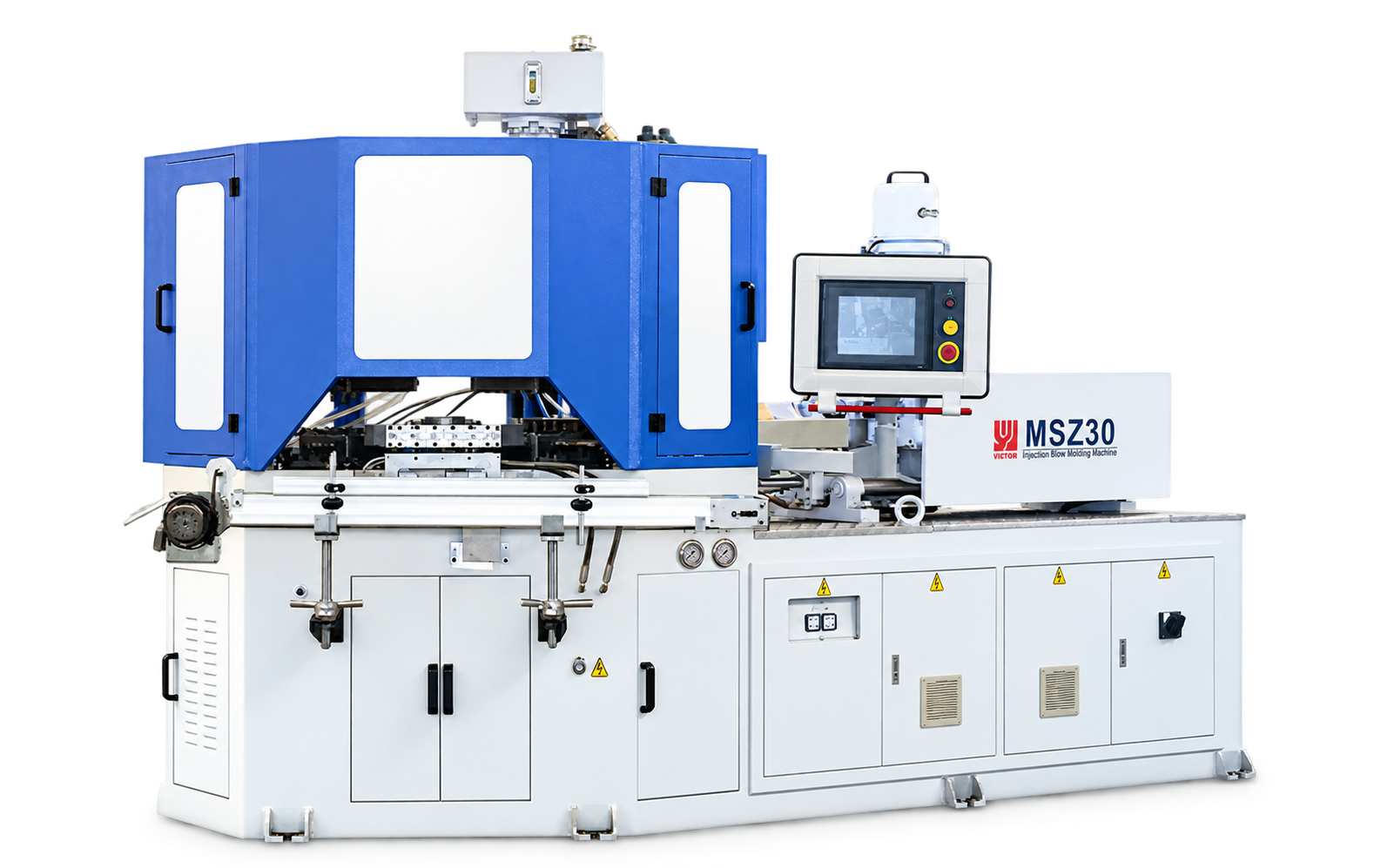
- For 30–100 ml bottles, the MSZ30 is the right platform for small precision containers, multi-cavity molds and fast changeovers.
- For 100–250 ml, the MSZ50S delivers high-speed production for medium bottles.
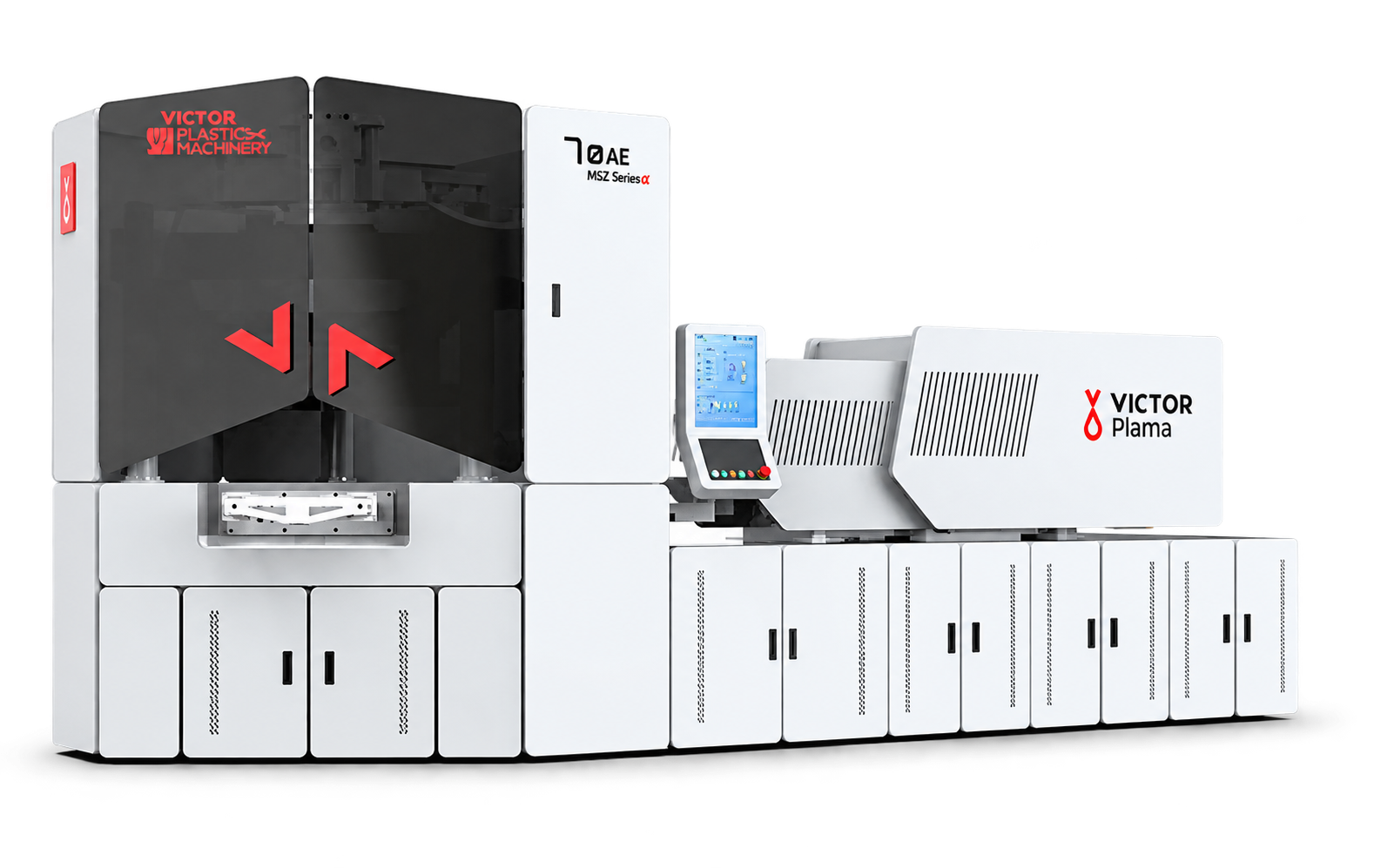
- For 250–500 ml, the MSZ70AE combines all-electric operation with clean performance for larger bottles.
These are starting points, not a fixed rule. A 100 ml bottle with a heavy wall and a wide neck may run better on a different platform than a thin-wall 100 ml bottle. We confirm the machine after reviewing the drawing and target output.
Syrup bottle sizes, materials and neck finishes
Most dry syrup projects sit between 30 ml and 500 ml. Common commercial sizes are 30, 60, 100, 150, 250 and 500 ml; larger or intermediate sizes are mold-specific.
| Item | Typical dry syrup bottle |
|---|---|
| Volume | 30–500 ml; sizes outside that range are evaluated individually |
| Material | PP homopolymer or copolymer – clarified PP for PET-like clarity, opaque PP for light protection |
| Neck finish | 28, 33 or 38 mm (45 mm for large formats), matched to the measuring-cup closure and sealing system |
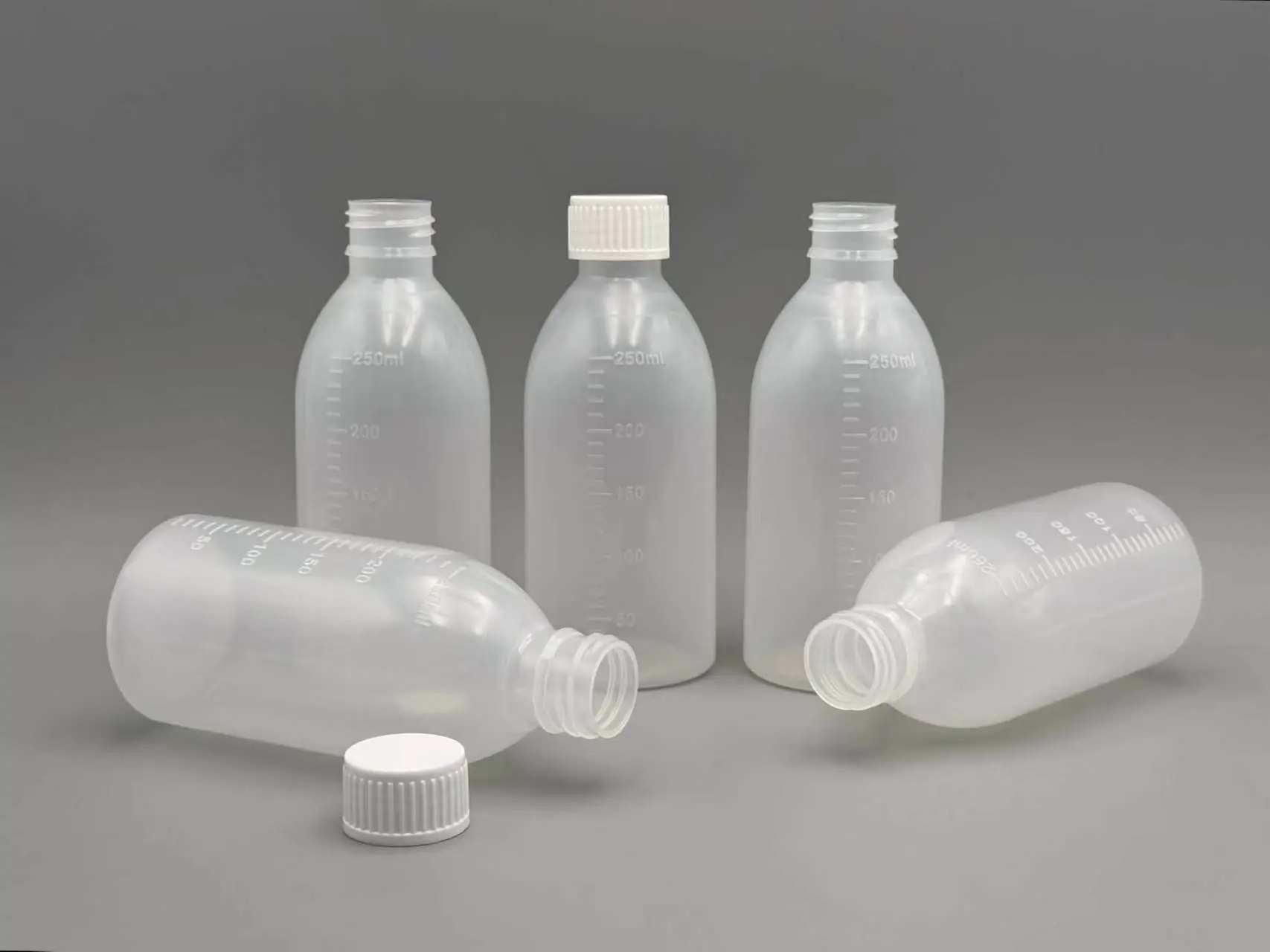
| Graduation marks | Molded directly in the blow mold, typically 0.2–0.3 mm deep, calibrated at 20 °C |
| Light protection | Transparent or opaque brown, with light transmission verified against the drug’s sensitivity |
| Surface | Gloss or matte; a high-polish mold is used for PET-like gloss |
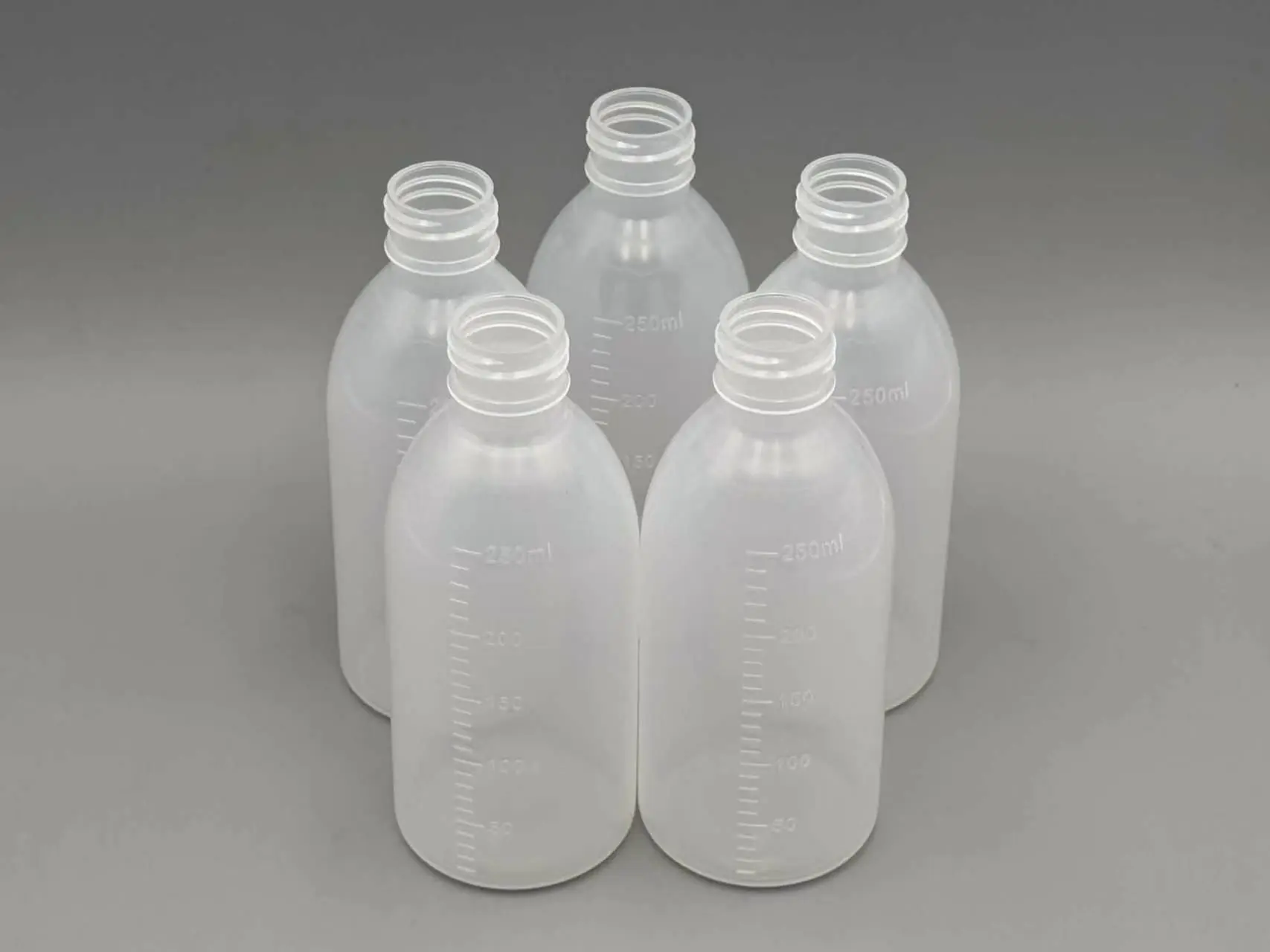
Sizes. 30–500 ml covers most dry syrup bottles, including pediatric and adult formats. If your roadmap includes 500 ml+, tell us at the quoting stage; mold and machine selection change.
Materials. PP is the default because it is lightweight, shatter-resistant and has a good moisture barrier. For transparent bottles, use a clarified PP grade; standard PP is translucent and will not match PET. For brown bottles, use a medical-grade brown masterbatch; the carrier must match the base resin.
Neck finishes. The neck is not just a diameter. The thread start, sealing land, tamper-evident bead and cap-fit dimensions all matter. Send the closure drawing or a physical cap sample; we will match the neck insert to it. Common dry syrup necks are 28, 33 and 38 mm, with 45 mm on some large formats.
Recommended machines and cavities
Machine selection starts with the bottle, not the catalog. We look at volume, bottle weight, wall thickness, neck finish, color and target output. Then we calculate the cavity count and cycle time.
| Machine | Bottle volume | Material | Cavities | Cycle | Output |
|---|---|---|---|---|---|
| MSZ30 | 30–100 ml | PP | 4–6 | – | – |
| MSZ50S | 100–180 ml | PP | 8 | 14 s (100 ml, 8 cav.) | ≈2,060 pcs/h (100 ml) |
| MSZ50S | 180–250 ml | PP | 4–6 | – | – |
| MSZ70AE | 250–500 ml | PP | 2–4 | – | – |
Figures from Victor production projects; actual output depends on bottle design, weight and material.
For 250–500 ml bottles on the MSZ70AE, shot weight, mold size and output determine the final layout.
From PET and glass to PP
PP is not a cosmetic swap. It changes weight, drop performance, barrier and the way the bottle feels in the patient’s hand.
| Property | PP | PET | Glass |
|---|---|---|---|
| Density | ≈ 0.9 | 1.33 | 2.5 |
| Breakage | Does not shatter | Can crack | Breaks |
| Moisture barrier | Good | Good | Excellent |
| Oxygen barrier | Lower than PET and glass | Higher than PP | Higher than PP |
| Transparency | Good (clarified PP) | Clearer | Clearer |
| Heat resistance | Good | Limited | High |
Where PP wins. PP’s density is about one-third that of glass, so a 100 ml bottle is dramatically lighter – and it will not shatter on a bathroom floor. That matters for elderly patients, caregivers and anyone handling the bottle outside a hospital. For dry syrup, the powder is protected primarily by the closure and the bottle’s moisture barrier; PP performs well here.
Where PP needs care. PP has a lower oxygen barrier than PET and glass. For a dry powder that is reconstituted and used within a short period, that is usually acceptable. For a liquid syrup with a long shelf life, run a stability study before switching. The closure, liner and headspace also matter. The same IBM platform is used for oral liquid bottle machine projects, but liquid products need a different barrier and shelf-life review.
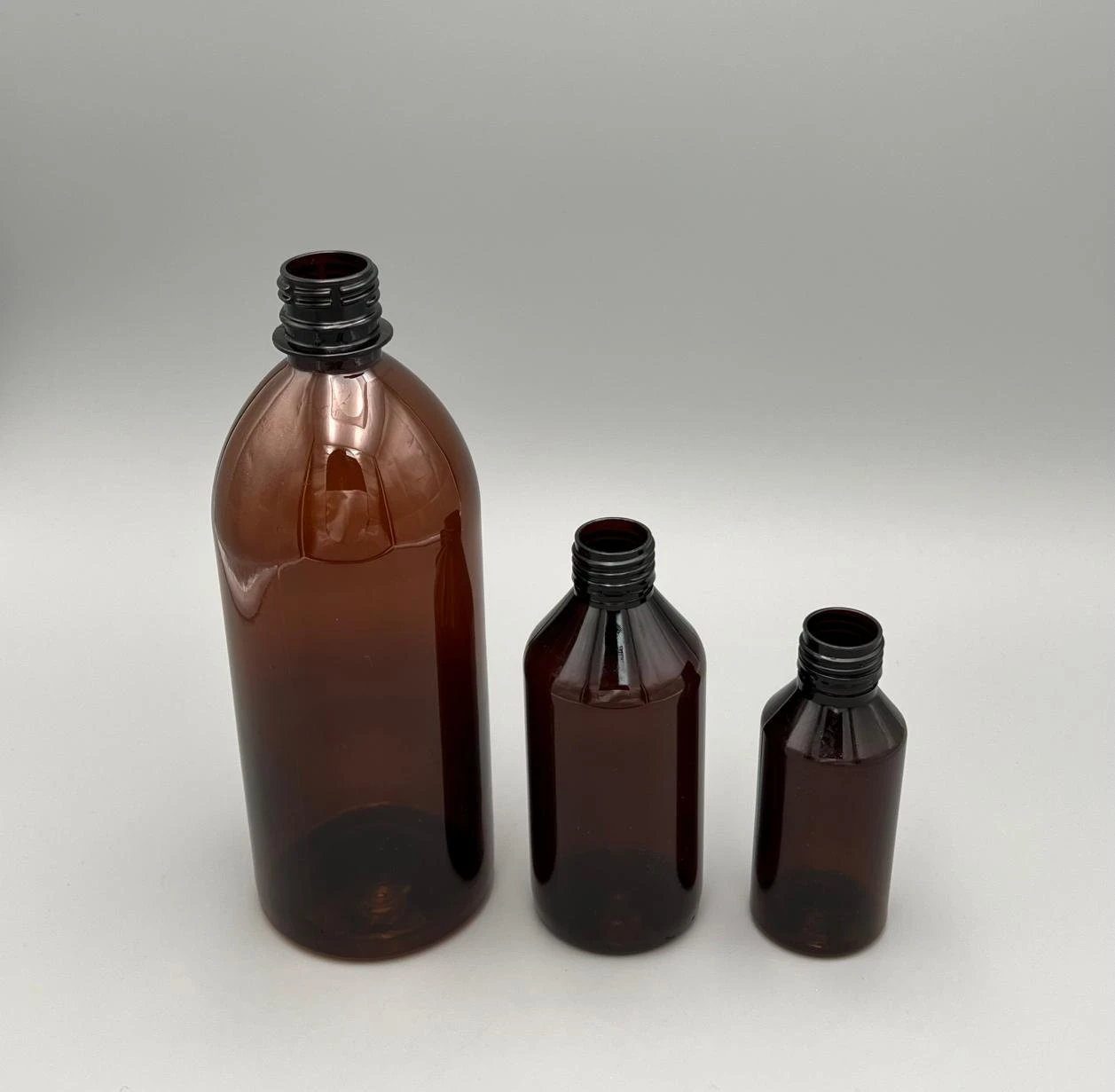
Surface. Standard PP is translucent. To approach PET gloss, use a clarified PP grade, a high-polish mold and optimized injection and blow parameters. The Abbott project is an example: the bottles were converted from PET to PP, and the surface was kept close to PET.
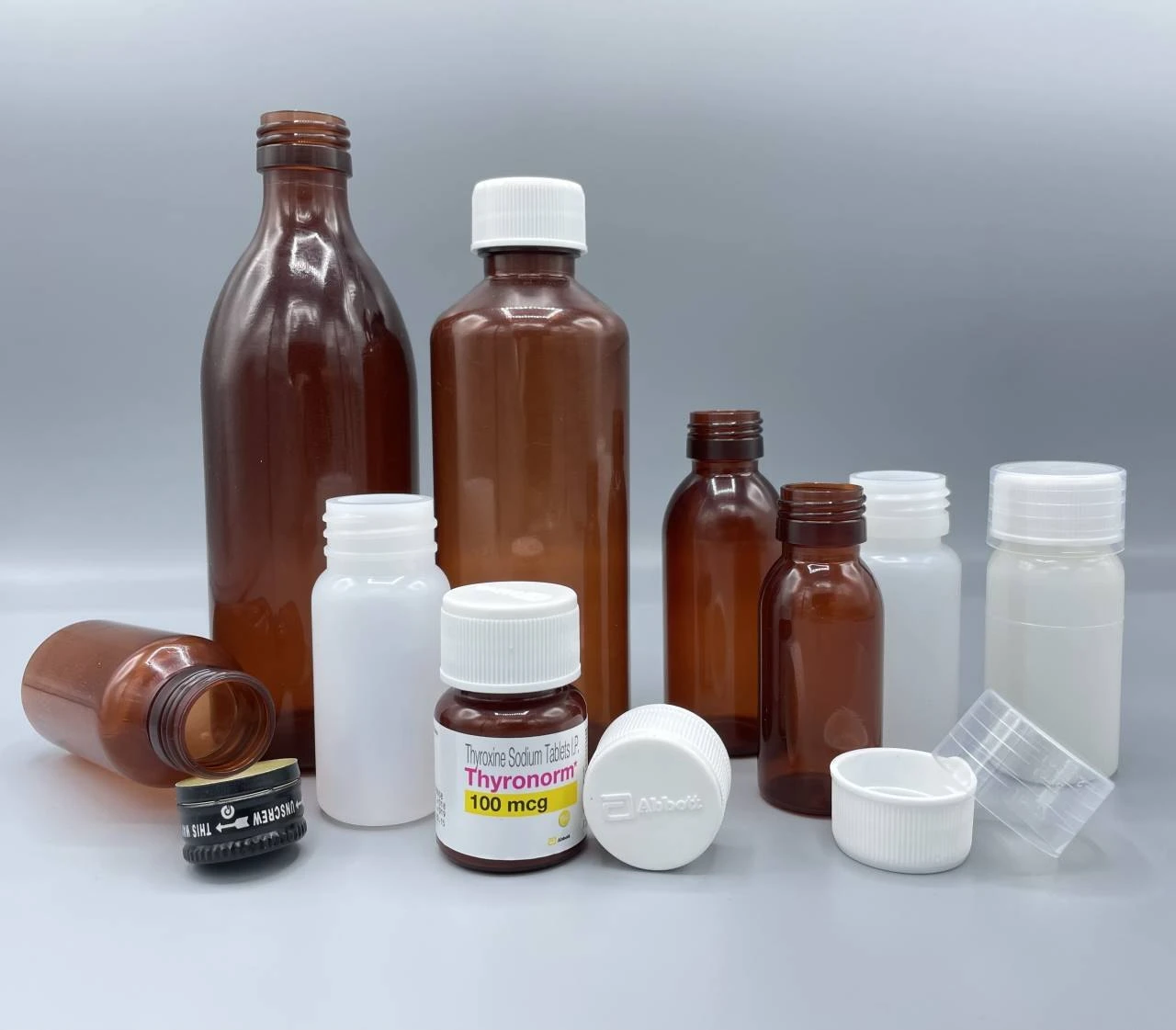
Case study
PET to PP: 30–500 ml dry syrup bottles across 11 molds
A pharmaceutical customer originally used PET for its dry syrup bottles, then switched to PP and selected Victor IBM machines for production. The project covers 30–500 ml across 11 molds, with bottle surface quality close to PET. The scope includes:
- Neck fit with the existing measuring-cup closures
- Brown light protection that still looks premium
- Graduation marks that remain legible after filling and washing
- Consistent bottle weight and wall thickness across all 11 molds
- A cost and output profile that supports the material switch
Three-station injection blow molding
One machine, three stations, a finished bottle
- Station 1 · 0°
Injection
The preform is injection molded on a core rod – the neck and thread of the syrup bottles are finished here and never change again.
- Station 2 · 120°
Blowing
The table turns 120° and air through the core rod blows the warm preform into the bottle mold. No parison, no pinch-off, no flash.
- Station 3 · 240°
Stripping
Another 120° and the finished bottle is stripped off the rod, ready to pack – no trimming and no scrap, with all three stations working at once.
Machines used
Machines for syrup bottles
Syrup bottles: FAQ
Can PP syrup bottles replace glass?
Yes, for most dry syrup and dry suspension bottles. PP is lighter, does not shatter and has a good moisture barrier. For liquid syrups or oxygen-sensitive formulations, validate shelf life first; PP’s oxygen barrier is lower than glass and PET.
Can graduation marks be molded directly?
Yes. The lines are cut into the blow mold and formed in one piece with the bottle. A typical depth is 0.2–0.3 mm; the mold is calibrated at 20 °C so the reconstitution volume is correct.
How are brown light-proof bottles made?
Brown PP bottles use a medical-grade brown masterbatch. Transparent brown with clarified PP gives an amber, PET-like look; opaque brown gives maximum light protection. We test light transmission and can support photostability protocols.
What neck sizes are common?
28, 33 and 38 mm are the most common dry syrup necks; some large formats use 45 mm. The right choice depends on the measuring-cup closure, sealing liner and filling line. Send the cap drawing or sample and we will match the neck.
How many bottles per hour can a Victor machine make?
There is no single number. Output depends on bottle weight, wall thickness, cavity count, cycle time and uptime. We calculate it from your target output and confirm it at trial. A 100 ml PP syrup bottle typically runs in an 8-cavity mold on the MSZ50S at about 2,060 bottles per hour; the final layout is confirmed for each project.